Showing posts with label sense8. Show all posts

Friday, July 3, 2015

Sense8 S2 Episodes 9-12

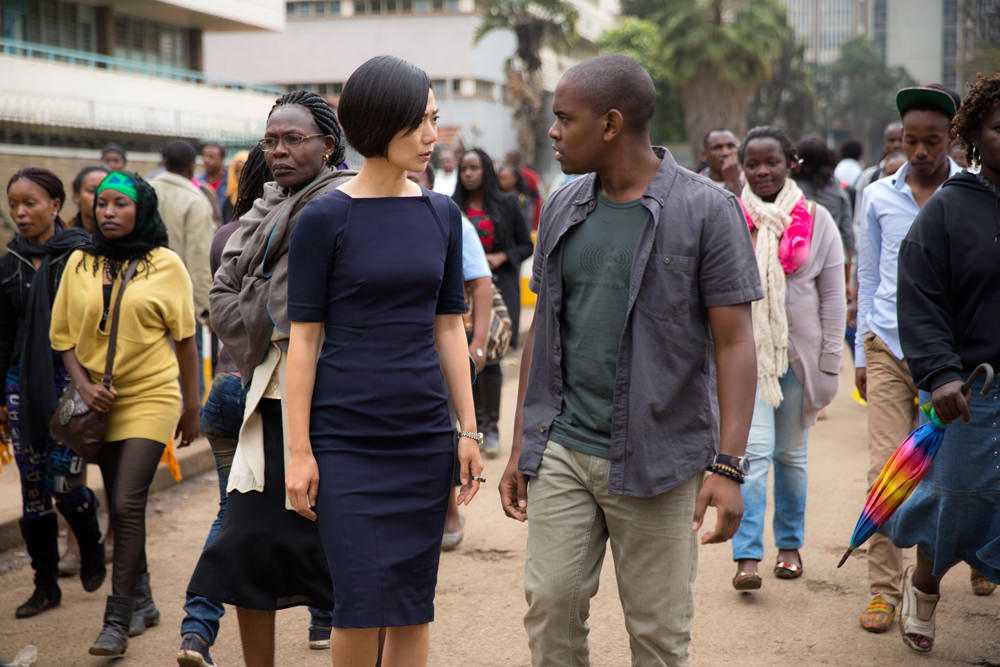
An interesting thing happened while I rewatched the last act of Sense8, I stopped taking notes as I had been doing consistently through the first eight episodes and just watched it all transpire again. It shouldn't have been as engaging since I literally only just watched these episodes for the first time a couple weeks ago, but I couldn't pull my eyes from the screen. It wasn't that I didn't have anything to say about what happens in this final act, but what I had to say took a backseat to the experience. And I think that's most of what I love about this show in a nutshell: it's not without its problems, when you stop and think about things for too long (like why the hell does Wolfie just happen to have a damn bazooka in the trunk of his car?), the story can falter a little bit. But it's all so interesting, so engaging, and so unlike anything else on TV that you can be totally immersed in the story while its on. In a scene where Kala Visits with Capheus, she asks him why a house might have a big screen TV but no bed. His response is that the bed keeps you in the slum while the TV takes you out of it. True escapism at it's finest. It's not the only thing I love about storytelling, but it's certainly one of the things I love the most, and I think Sense8 does it about as well as any other show out there.

The last four episodes serve as a culmination of everything the show had been building towards for the eight that came before. Most of the stories draw to a solid conclusion, we get an awesome sequence of all of the cluster working together to use their skills and save one of their own, and a fairly solid path forward for future seasons, assuming there are any. Collectively, these elements combine to make a thrillingly satisfying ending, but taking the stories on an individual level, I'm less sure.

I mentioned previously that Lito's story is my least favorite of all the individual threads they follow in
the first season, and that's equally true for the ending. The scene between him and Nomi in the eighth episode is brilliant, but it's also the first extended Visiting scene he has in the season. The scene where Sun is on her period and he feels the effects for it was mostly played for laughs, as are most of Lito's scenes, and this is the first time that he has this kind of sit and talk and share some piece of yourself moment that the others have been experiencing all along. It's a part of what I don't like about Lito's story: he feels so isolated from the others. But the other thing I didn't care for about Lito's story is that it felt the most predictable. From the moment Lito allowed Daniela to go off with Joaquin, you knew there was no other way for his story to go. Of course he spirals without Hernando, of course he finds his courage and goes after her, of course he gets her back and his actions allow Hernando to forgive him and they all get to be a happy family again. Subtlety was never Sense8's strong suit, but this was all a bit too obvious for my taste. Which leads me to say that we've seen this kind of story (specifically the closeted gay man having to come out in order to earn the love of his out boyfriend) enough times before that there's nothing new or interesting that can be done with it, so maybe choose a better story next time.

With that being said, Lito finding his place within the cluster by helping Wolfie achieve his action movie climax was amazing. I complain about Lito's isolation from the rest of the cluster, but the truth is that Wolfie is isolated too. Prior to the tenth episode, which opens with him having a brief and perplexing conversation with Will and leads to his moment with Lito, the only person he'd spent any one on one time with was Kala. That's still one more senseate than Lito spent time with, but the fact that the two of them are the cluster's most isolated characters and they join together to help one another through their respective story's endings makes a lot of sense and is very fulfilling. If the two of them continue to be on the fringes of the group moving forward, it could be a lot of fun to see a close friendship developing there.

I've mentioned the show's potential balance issues before, and that came up in small ways in these last four episodes. Lito and Will's conversation during the attempt to rescue Riley bugs me. These last four episodes feature a couple of the cluster members meeting for the first time. Capheus and Kala sit and watch a movie together, and the aforementioned scene between Nomi and Lito is their first meeting as well (other than the orgy). In both of those cases, the characters start off not by introducing themselves but by acknowledging that they already know who one another is. Nomi looks at Lito and says, "You're Lito," and he responds with, "You're Nomi." But when Lito pops up in the BPO facility, the first thing Will says to him is, "Do I know you?" It's a line purely in service to the comedy of their awkward exchange about the orgy they had and Will's being flustered about it all, but it doesn't work for me. I think you can stick with Will's discomfort about having had sex with two men and one woman, and the weirdness of it all, but there's no real excuse for the group to have reached the last episode and for him to still be unsure about who anyone in the cluster is. It strikes a discordant note to me.

But there's also an element of discordance to the entire final act which kicks up the action elements of the show to a much higher level than any previous point in the series. I don't think that this is a mistake, the ability for this show to be high action has been there from the start, but it was obvious that they wanted to focus on the characters first and the action later. I think all of this was done in an attempt to make sure that when the action happened, we were invested enough in the characters to care about who was getting shot at and why. But it still makes the third act feel, at times, like a slightly different movie than we've been watching for the last eight hours. The quiet character moments that set this show apart from others in the genre are still there. Lito and Nomi's scene is a landmark scene for the two queer characters within the cluster. Capheus and Kala's scene is a mirror of the scene he shared with Sun in the fourth episode. And this group of episodes doesn't lack in more of the romance between Will and Riley and Kala and Wolfie. There's also the third moment of the series doing something that no other show on TV is doing: the birth scenes while Riley listens to her dad playing.

First the 4 Non Blondes song, then the mind orgy, and now graphic depictions of each senseate's birth all set to classical moment and streamed one after the other. It's honestly transcendent in a way that no other show could really capture. The first time I watched it, I cried like a baby over the beauty of it all. This time, I didn't cry but I still had goosebumps and I couldn't believe how each of their births informed so much of who they'd each become. Kala born in a temple, Will delivered in the back of a cop car, Lito born while the whole family watched the latest telenovela. Who they are echos back to those moments and they are connected to those moments in a deep way, and each of them being connected to their own moment connects them to each other's as well. It felt magical and moving.

But there's also the action. And the action comes to the forefront in a way that it simply hadn't prior. In the last four episodes, there's multiple shoot outs, car chases, two games of chicken, multiple explosions, and hand to hand fights. Each action sequence works because we are invested, so the show did its work well, but the overall feeling of watching a different show is still there on the surface. In the end, I think this is neither good nor bad for the first season, it's just a fact.

It all leaves me with a feeling that through the course of its first season, Sense8 was capable of telling us exactly who it was. It's a show that's capable of grand ambition and showing us things we've never seen before. It's a show about the quiet moments between these connected characters that prove we aren't alone in our personal struggles. And it's a show with some really great action moments. These things don't have to be mutually exclusive. Indeed, in a show about eight people scattered around the world who are all living different lives but get to be constantly connected, I'm not sure how these things could be mutually exclusive. How Sense8 is telling its story is intricately wound up in what that story is, and that's a brilliant thing to find in a first season.
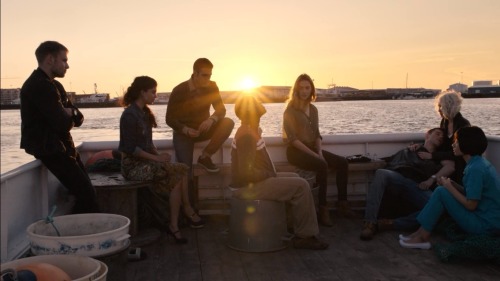
Which leaves us with the question of what me might be able to expect from the show going forward? In spite of Netflix's procrastination in announcing a renewal, I find it hard to believe that we won't be getting more episodes. So what might happen? Having Will look at Whispers in the last episode means they'll have to address that in some fashion moving forward. It also probably means that killing Whispers so that Will can have his mind to himself again should be at the top of the Cluster's to do list. Will and Riley are together now, though we don't know for how long, so I expect to see more about how love within a cluster is narcissistic, as Riley's Iceland friend, Inga, put it. Meanwhile, Kala and Wolfie seem to have hit a snag in their own romance. Watching the two stories progress alongside one another should be fun. But mostly, all I think I want to see is more scenes like Riley's rescue. More of these people jumping in and out of one another's lives at just the right time to add their own special skill set to the mix and solve the problem before them.  The way the show figured out how to have a specific use for everyone was brilliant, and if that's more of what the next season looks like and less about each character's individual stories, then I'm all in.

Random thoughts:

--One thing I'm still not sure on is Wolfie's statement that he's a monster. On the one hand, I think he's just feeling a bit down on himself after the events at his uncle's place, but prior to the last episode, there was no evidence of him being monstrous. So should we take the statement with a grain of salt, or does the show honestly want him to be a bit more on the homicidal maniac side of the spectrum? The way Will calls him in to play chicken with the helicopter suggests that he's akin to a suicide bomber within the group. But I still don't know if I feel like that was earned or not.

--Something else I feel very split on is Riley's background. Currently, she feels like the one cluster member with the fewest skills or knowledge to offer in big action moments. But beyond that, the last episode being so focused on telling the story about her and her husband seemed like a miscalculation to me. It's not that those flashbacks weren't affecting, because they were. But in a situation where so very much of who she is in these moments has to harken back to this experience, it seems a bit odd that we're only just finding out about it now. They do a good job of dropping hints about it all throughout, esp in the episodes after she's back in Iceland. So I feel confident that they knew this backstory all along, but it's another moment where part of me thinks they should have told us about it before they did.

--For all of my dislike of Lito's story, his scenes at the bar were really nice. I liked it that they had him go back and apologize instead of allowing the scene to just kind of exist in a bubble. But also, did he actually pay for any of those drinks? I know he's famous and all, but still.

--I mentioned it earlier, but Wolfie just happening to have a bazooka in his trunk made me laugh both times. It never pulled me out of the narrative, but it was still funny and slightly unbelievable, but still fun.

--One more thing I'd like to see if the show is renewed is for the partners to be a little bit less perfect. Amanita, Hernando, and Rajan are all just way too storybook for me. I love them all as I love all the characters on the show, but a few flaws can go a long way.

Saturday, June 27, 2015

Sense8 S2 Episodes 5-8

“Who can say if it is we that make the choice, or the choice that makes us?”

Capheus' line from the fifth episode gets at one of my favorite aspects of this show: the question of
what makes us who we are. And also how who we are can bind us to others from around the world no matter how dissimilar we might seem. It also comes in the moment I knew I was going to go all in on this show. I think the 4 Non Blondes singalong from the fourth episode was a landmark moment of the series, but the conversation between Sun and Capheus in this episode marked the true strength of the series for me. It's two people who couldn't be more different; Capheus an African man with an exuberant and outgoing, optimistic personality, and Sun a Korean woman who is more reserved and internal and strongly pragmatic than most of the other characters. They get together and they just talk. There's no running, no shooting, no action, no big time governmental conspiracy behind their conversation, simply two very different people talking and finding out that they aren't very different at all.

I love the conversation that they have. I love the sheer amount of "I" statements found in it. Sun's isolation and struggle to answer the question before her calls Capheus to her in spite of how much she wants to be alone, but instead of having some kind of "tell me your problems and let me offer a solution" moment, Capheus talks about his family and his history with his mother. Sun talks about her family and her last moment with her mother. And through these similar relationships and experiences, the two of them arrive at a solution for their respective problems. Capheus remembers the importance of keeping his promise to care for his mother through everything, and Sun remembers the importance of keeping her promise to protect her brother and father. It's clear that their decisions to work for Mr. Kabaka and to go to prison respectively will setup their stories moving forward, but for the time being, it's just two people talking mostly about themselves, finding their similarities, and wading their way towards a hard choice.

The way the show can strike a balance between these quieter moments, and the bigger more action based ones is to its credit. But the second act of this 12 hour long movie also exposes some of the weakness in the storytelling. Or maybe it would be more accurate to say that it exposes the very very fine line that I think the show walks sometimes successfully and sometimes a bit more wobbly. I talked in the last review about the pacing issues, how slow the show can feel through those early moments, and about when the show decides to release certain information. The biggest element of these in this second act comes in the form of the closure of Dr. Metzger's influence on Nomi's story.

It takes a full seven episodes before we find out who Metzger is actually working for. This information reshapes our interaction with Nomi's stint in the hospital from the first four episodes. He isn't some shadowy monster hired by her bigoted family to lobotomize her. He's a shadowy figure from a huge multinational conglomeration, BPO, who has been working to lobotomize senseates all around the world. That makes far more sense! Forgive my flippant tone here. In all honestly I do think that this explanation makes far more sense than the assumptions we were left to make before hand, but I also think the conspiracy storyline is the weakest within the show. But more on that in a future review.

This question of what information to release and when is at the heart of most storytelling. And the truth is I'm still not sure if I think Sense8 answers it properly. Telling us something more about Metzger when he was gearing up to perform the surgery would have changed my view of that particular story early on and helped things make a little bit more sense. It would have changed my perception of Nomi's mother from a cartoonishly evil villain, into someone who has her flaws but still honestly thought she was doing the right thing for her daughter. But having this information then would have eliminated the mystery aspect of finding it out here. So what's more important: giving your audience the information they need to make a scene make sense at the time, or preserving the mystery? I don't know that I have an answer to that question, but what is clear is that Sense8 chose the mystery and to a certain extent the first three episodes suffered as a result of that choice. If anyone couldn't make it through those episodes because they didn't have this information, then I wouldn't be able to blame them, but getting it here was a lot of fun and they certainly missed out.

There are two scenes in this collection of episodes that I think are just as much landmark scenes for the show as the singalong from the first act was. The first being the orgy scene in the sixth episode. It comes (pardon the pun) smack in the middle of the series (it's the center-most point of the center-most episode), and it is phenomenal. It's hot no matter how many times you watch, it's an unabashed moment of the producers saying, "Look at how beautiful our cast is," and it also answers one of those silly and simple but still important questions that sci-fi stories often have to grapple with: What's sex look like for these people now that they've been born to their new lives? The answer is hot, pansexual, international, and intense. And good for them! There's also something important about the fact that Sun, Riley, and Capheus are missing from the sexy fun times (though I can't really spot a solid reason for Kala's absence. Maybe she's sleeping). Lito and Nomi are having sex with their respective partners, Wolfie is turned on by a woman at the naked spa he seems to spend so much time at, and Will is exercising which we all know releases endorphins and gets you all worked up. So everyone participating in the mind orgy is already in that aroused headspace and get those emotions kicked up a notch by the actions of two members of the cluster. Riley, and Sun, however, feel sad and troubled at this moment. And Capheus is bored but trying to remain professional as he waits for his boss's daughter to finish her treatment. These three, even though they all seem to be awake at the moment the mind orgy happens, are not experiencing emotions that would allow for them to participate. Capheus at least seems to get a boredom boner while watching another Van Damme movie, but that's the extent of the effect. It shows, in my opinion, that the people behind the show are still really thinking about the deeper implications of everything they're doing. And this conscious and reasonable exclusion of specific characters takes a scene that otherwise might have been totally gratuitous and makes it an important moment of deepening the show's mythology.

But it also exposes one more potential problem with the storytelling. It feels like the producers know the portions of the story they're focused on now might be a bit slow and boring, and so every now and then they toss the viewers a bone to get them over the hump. Some of the action sequences and certainly the mind orgy scene feel as though they fall into that trap. They aren't wrong, per se; the story through this middle section of the show was especially slow and boring to me on this second viewing. But much as Game of Thrones often used sex and nudity to spice up what they thought was a boring exposition scene in their first season, Sense8 is trying to mask the fact that they couldn't come up with a more natural way to make the story engaging in its own rights by throwing sex at us as a distraction. I agree with the tactic here more than I did on Game of Thrones because 1) the scenes on Game of Thrones weren't as boring as the showrunners thought they were and therefore didn't need spicing up, and 2) because the sex here actually does do a good job of deepening the mythology of the show as I said. So if the distraction can still hold some level of importance, then I can't see a reason to fully dissuade them from using it. Though I would suggest maybe choosing a more interesting and engaging story for next season so you don't have to fall back on these tricks.

The other scene is Nomi's big action sequence towards the end of the eighth episode. This is the start of the other reason I think I love this show more after a first season than I do most other shows in the same time frame. One of the reasons I don't care for first seasons as much as I do subsequent seasons of a show is because I'd much rather see characters in control of their skills and abilities than simply learning how to get there. One of my favorite moments in Buffy the Vampire Slayer comes in the finale of the fifth season when Buffy goes out back to kill a vampire like it's nothing and then walks back in to continue the conversation about how she's going to save her sister from a god. Vampires through the first three seasons represented a serious threat to the group. Every night offered Buffy a difficult fight, and the villains she was most frightened of (Spike, Drusilla, The Master) were all just vampires. But by the time you reach the fifth season, slaying a vampire is just "what I do," as she puts it.

While the senseates aren't quiet as in control after their first eight episodes, the start of that control is beginning to shine through. Will and Nomi are drawn together through their simultaneous investigation into the BPO issue. And so he helps her to escape when Whispers is coming for her. Her distress wakes up Sun who joins with Will's knowledge of basic police procedure to keep them informed of what's happening and to give Sun a leg up in her fighting with predetermined information. All of this is seamless, and when you consider that Sun hasn't spent much, if any, time with either Will or Nomi before now, you see that there's an ease with which she can come to their rescue and do her thing. Likewise, as soon as Nomi gets into the car and remembers that she doesn't know how to drive, here comes Capheus with his exceptional driving skills to help her out. It's a fun and important scene that showcases a taste of just what is possible through the senseate connection. If this is what can happen when just four of them Share with each other and use their skills to help one another get through a tough situation, then imagine what it will be like when all eight of them work in tandem. Honestly, I don't think it's spoiling anything to say that we won't have to wait for the realities of that too much longer. To give us the satisfaction of that in the midst of the first season is remarkable. And it feels, at least to me, like its happened sooner here than it would have in most other shows.

The other stories drag a little through these middle passages as the show works to setup the final moments. A lot of what happens here is clearly just table-setting of everything to come. Felix gets shot and ends up in a coma with Wolfie by his side. It's a tragic thing that stems clearly from their theft and sale of the diamonds in the first act; before he's shot, Felix is panicking about the fact that he tried to get in touch with Abraham and hasn't been able to. But there's still something that feels a bit more liminal about it all. I was invested the first time I watched it, and even still invested now, but it's not as satisfying as the heist that came before it and the action that will follow. So you're left viewing these scenes as what they are: an excuse to get Wolfie and Kala more time together, and obvious setup for what's to come in Wolfie's story.

The second act does at least represent the strong escalation of Kala and Wolfie's romance. When he shows up naked to her wedding (and shout out to the writers and directors for going with a full frontal male nude shot here when so many other shows shy away from such things while not at all second guessing the choice to show women naked), it starts the main portion of their story together. The track of their romantic relationship running alongside Will and Riley's is one of the things I like about the show. But in these middle moments it makes Kala and Wolfie feel more isolated from the rest of the group in a way that bothers me. I think the show has a slight problem with balancing who spends time with whom in the cluster, and that's hardly ever more glaring than in this story where Wolfie spends pretty much all of his time with Kala and she spends most, but not all, of her time with him. More on that to come.

With that being said, I love their rooftop conversation about her faith and his atheism. As an atheist, I tend to side with Wolfie here, but I also really enjoy seeing and hearing stories about people who do have faith and who have thought about their faith and the reasons they hold it and have strong moments in their past that connect them to their faith. The scene of Kala as a child looking out through Ganesh's eyes and seeing the festival and becoming a true believer is beautiful and moving. And her assertion that her love and belief in science is not mutually exclusive to her faith is a really nice touch. The show's continued work of making these characters deep and three-dimensional is something that should be applauded.

Sun's story finds itself starting in earnest while most of the others are at a middle. The scenes of her in prison are the best for the character. And the story of how these women have found a freedom and a sense of community only in prison, having been removed from the male dominated world they otherwise live in, is both beautiful and heartbreaking all at the same time.

Lito is also at something of a beginning for his story. The first act for him served as nothing more than character introductions, while the second act introduces the real antagonist and the obstacle he has to overcome. Lito's story continues to be my least favorite, but I think I'll save most of my thoughts on it for the review of the last act.

So through the first two acts of the show we've seen great character work, a solid foundation being laid, a clear process within the four episode arcs, and the beginnings of how in control and how strong the cluster is capable of being. All of which, I think, has been handled deftly and with a self-assurance that other shows don't have in their first season. Next week, we'll look at the way they bring these things together in the final act and maybe talk a bit about what I think of as the last reason I loved this first season so much: The show's strong sense of identity.

Saturday, June 20, 2015

Sense8 S1 Episodes 1-4

I heard about Sense8 about a month or two before the episodes landed on Netflix. The trailer was intriguing, human, and sexy as hell. The buzz around the show was picking up quite a bit of steam on social media, and a lot of people I knew couldn't stop talking about how queer the show would be. Which, of course, was the first step in getting me to the point where I was more than excited to watch it. I started following a couple blogs on Tumblr about it, and everything I saw and everything I read from the showrunners only served to make me more and more excited for this show. I convinced myself that it would be the best thing on TV, and being helmed by the Wachowskis and J. Michael Straczynski, how could it not be? Fast forward a couple months and the first season arrives. I spend a weekend locked in my room watching all 12 hours over the course of two days and it all turns out to be even better than my ridiculously high expectations. I finished the 12th episode with an immediate desire to go back to the first and start all over again. Sadly, the pending release of Orange is the New Black's third season put a slight damper in those plans, but I've just watched the first four episodes again, and I have to say, it hasn't lost it's appeal for me. I think I'm solidly in love with something new and Sense8 has quickly worked its way into my top five favorite shows ever. This is an important development for me because I generally hate the first season of everything. The groundwork and foundation laying parts of storytelling which are always so necessary just aren't my favorite. So I went back to rewatch them in an attempt to find out why it is that those things don't bother me about this show. Hopefully over the course of these reviews, I'll figure that out, or at least I'll just have a damn good time watching the show again.

In an interview he gave Collider (which is well worth reading, honestly; you can find it here), Straczynski said something that shaped my original viewing of the season:
I want people to watch all 12 hours, straight through. If you have enough time on your hands to watch all 12 hours, straight through, that’s the best case scenario. That being said, once we restructured for 12 episodes, we realized that it’s almost a three-act structure. It’s four-episode arc is like an act. So, you could do four and four and four. That’s one way to watch it because there are good break points in there. But, my hope is that they’ll watch it straight through. From our point of view, it’s really written as a 12-hour movie. Ultimately, that’s what it is. When you walk into a movie theater, you don’t walk out half-way through, and then come back the next day to watch the rest of it.
 On the one hand, this can bee seen as a showrunner trying his best to drum up business and get as many people in to watch his show as possible, thusly insuring they get a second season. But I thought of it as something more than that; I thought it suggested that they'd thought about this show in ways that you don't find people thinking about their shows before they air. It's something I lament in a couple of my reviews of the show Empire, they seem to just be going from episode to episode without much thought or structure to the season as a whole. But from what Straczynski said, I assumed that they started with a story on Sense8, and then discovered their 12 episode format around that.

The first three episodes are slow. I realized this when I watched it the first time, but I was engaged enough with the characters to overlook it. In this sense, the pacing felt deliberate to me. A lesser show would try to rush through the character introductions, lay that groundwork immediately, and then hit the ground running. Sense8 wants to take its time, savor the introductions, and try to get you to connect with these characters on a real level. That doesn't mean that they don't paint with broad strokes in the early going like most shows do. But that's inevitable so like with any storytelling medium, you have to give them a little leeway. Will (Brian J. Smith) is a cop in Chicago, and when he finds a shot black kid in a bad neighborhood, of course he goes to save him against his partner's better judgement and of course he stands up to anyone looking to stand in the way of his noble and heroic action. In reality, he's just doing his job, but within the current climate of our increased awareness towards police brutality, it's the show's way of saying "We know he's a white cop in a big urban area, but it's OK, he really is the good guy!" You roll your eyes a bit, but you keep watching.

This is because the introductions that are subtle are more impactful because of it. Kala's (Tina Desai) intro is that of an Indian woman about to get married and having doubts about that marriage. But what's remarkable about that is the way the show skirts around certain cliches. She is Indian, and she is Hindu, but her marriage isn't arranged. The man she's to marry is important, and dreamy, and he chose her, and went about his courting and proposal in the right fashion. Any woman would be happy to have him. But Kala isn't. The show doesn't try to explain why she's unhappy with Rajan in those first four hours. But it does make it a point to say that it's not for the standard reasons you'd assume this woman in this culture would be unhappy with her pending nuptials. In so doing, they immediately paint Kala as a real and complex person, and avoid certain racist stereotypes.

Not everyone is given the same amount of development in the same short amount of time that Kala gets, but there are eight of them, so is it really realistic to believe that they could? Instead, the show is willing to allow the rest to fall into place over the course of those first four episodes; the first act of the movie if you will. Which is exactly where that belongs. In the first two episodes, we learn about Lito's (Miguel Angel Silvestre) secret relationship with Hernando, Nomi's (Jamie Clayton) relationship with her mother and the specifics of her identity as a trans woman, Capheus' (Aml Ameen) difficult life as a bus driver in Nairobi taking care of his sick mother, Sun's (Donna Bae) strained family relationship and her precarious position within her father's company, Wolfgang's (Max Riemelt) criminal activities, and a few things about Riley (Tuppence Middleton). Admittedly, Riley gets the least amount of development in those first four hours in spite of her story starting off with the most action and suspense. Either way, it's eight characters with eight different stories all capable of being the center of their own shows, and yet we get a solid foundation for each of them in the first four hours. It's an ambitious feat for any series, and one that I think Sense8 handles as well as can be expected.

A portion of the credit for that goes into the way the show chooses to introduce and wrap up storylines. Two great examples of this in the first four hours can be found in Nomi and Wolfgang's stories. Nomi falls off of a motorcycle while riding with her girlfriend in the San Francisco Pride parade. She wakes up in the hospital to find her horrible mother still insisting on calling her Michael (her birth name), and partnering with a Dr. Metzger to force her to have a brain surgery she doesn't want to correct a defect she may or may not have. In the first episode, Wolfgang and his best friend Felix race against a rival gang to break into a safe and steal a nice amount of diamonds. It's a tense sequence in which Wolfgang attempts to crack a safe we're told is supposed to be uncrackable. They succeed, of course, and make off with the goods at the very last minute.

It makes sense to introduce these stories in these early moments. The scenes serve to tell us a lot about the characters in question and setup a lot of the story moving forward. And the impressive thing is how they're both granted soft endings in the fourth episode. Wolfgang and Felix steal the diamonds in the first and find a way to sell them in the fourth. Boom, that's done (of course their overall story is only just beginning, but more on that in awhile). Likewise, Nomi's escaping from the hospital and right out of Dr. Metzger's clutches by the end of the fourth episode, but more importantly it also marks the last time we'll really see her mother for the rest of the season. The actions and choices made in the fourth will have consequences for the episodes to come, but if you're interested in the story about this trans woman being held against her will and trying hard to have the people in power validate her identity, and protect her body and her rights to make her own choices about said body, well then that story's been told and now it's time to move on to what comes next.

The other thing that works here is balance; not every story ends in the fourth episode. Lito doesn't have much of a cohesive story in the first four hours, but what will be the major conflict of his story for the rest of the season gets started in the third episode with the introduction of Joaquin. As I mentioned before, Wolfgang sells half of the diamonds they stole and brings some portion of that story to a close, but the selling the of the diamonds only serves to bring more trouble for him and Felix in the long run. Likewise, Capheus finds himself drowning in customers for his van in the wake of the events in the third episode, which seems to signal an ending to his financial and professional struggles. But he's also immediately introduced to Silas Kabaka, a shady businessman who has exactly the medicine Capheus' mother needs and will of course ask Capheus to do something underhanded in order to get it. So where one story might reach an ending, another springs up to take its place and set the tone for much of the rest of the season. The overall effect is that you can stop after the fourth episode if you so desire, but the storytelling is so well planned and executed that you really shouldn't want to. When a question is answered, another question, just as compelling as the first, is asked and the cycle continues. It's simple storytelling 101 kind of stuff, but the deft hand they employ to make it work this early in the show's run bodes very well for the rest of the season and for seasons to come.

If it seems like all there is to talk about with this show is the human drama elements, then that's because at its core Sense8 is a drama. The sci-fi elements of the show are brilliant and important, but they really only serve to enhance the human drama and to offer some really cool kick ass moments. The AV Club reviews of the show lament the early episodes' reliance on ending on major action sequences. And they aren't wrong per se, but I think they miss the point to a certain extent. The first hour ends with Riley in a tense and bloody shootout in a drug dealer's living room while her friends try to rob him. The second ends with Will in a high speed car chase. And the Third ends with Sun using the power of the Senseate bond to "Share" with Capheus and use his body to employ her great martial arts skills to kick some ass. But to say that these scenes are nothing more than perfunctory action sequences to hold the viewer's attention through these slower moments is to miss the nuances of each.

Will's been having a lot of weird things happening to him, and at the end of the second episode, he meets someone who seems to have the answers he needs. The problem is that at the beginning of that episode he was told by a higher authority that this person is a wanted terrorist. So while the scene that follows is a standard action-y car chase through Chicago, the character motivation that fuels it is important. Will had to choose on the spot between his years of cop training and doing what's "right" within those parameters, and listening to his gut to get the answers he needs. He did what makes sense and as a result Jonas (Naveen Andrews), the one person with answers, is taken into custody. It's smarter than your average Michael Bay car chase. It's not action for action's sake, it's action for the purpose of greater characterization. Likewise, Sun's scene with Capheus severs the purpose of showing us what the Senseate bond is capable of. We get a quick rundown of the difference between "Visiting" and "Sharing" from Jonas after he's been arrested, but the fight sequence to end the third episode puts all of it into motion. We see how Sun's abilities can be used by Capheus to help him out of his situation. In the same scene, we also see Will imparting a bit of his gun training at the shooting range. This kind of thing is only possible from within the Cluster, and that fact will be very important later on. But for now, the show gives us these action moments in an attempt to show us these things instead of just telling us.

But as I said earlier, the first three episodes are slow and can be a bit boring at times. So while the action based endings aren't, in my opinion, solely about spicing things up with a little excitement, I do think that they have that effect. And it's a solid and valuable reward for sitting through what otherwise might be an hour of tampered enjoyment. But it all leads into the biggest takeaway from the first four episodes: Sense8 is not a sci-fi action show; it's a drama with sci-fi elements. This fact is brought home in the best scene in the first four episodes, and maybe even the entire season. That's the singalong to 4 Non Blonde's What's Up. It's a fairly standard 90's song that I don't have a particular attachment to, but it's impossible not to have a deep emotional reaction to the sequence. It's simply so very very human. Two of the cluster members just so happen to be listening to and singing this song at the same time (Riley on her mp3 player, and Wolfgang at karaoke), and that leads to it kind of vibrating through all the rest of the members and bringing them together emotionally if not physically as it does Wolfgang and Kala. I think this has less to do with the song in particular, which is a great choice and certainly resonates with the themes of the episode, and more to do with the sheer universality of music in general. I think it's something all cultures share, and having a deep emotional reaction to music is something I'm sure everyone's experienced at one point or another. So you know what the characters are feeling at this moment in time, and you know what it's like to be in a car with friends, or at a concert with a bunch of strangers all listening to the same thing and all feeling close to the same emotion because of it. This scene is the reason you watch through the first four hours. If you make it through the song and you aren't all in for this show, then I'm not fully sure you're all together human.

These are the things I think the first four hours do exceptionally well. What doesn't work as well are some of the choices on when to release information. Lito's story suffers from this in a visible way over the course of the first four. He takes Daniela to a movie premier as his beard, and when she presses for the evening to end in sex he turns her down. This in and of itself is actually a nice moment as it shows that Lito isn't closeted because he's denying his sexuality, he's only showing a straight face to the press so he can keep getting the action movie roles he likes. He's not cheating on his boyfriend, he's simply hiding him away from the rest of the world. It's not that that makes it better, but it does make his story feel different from similar stories on TV. But what fails is when Daniela shows up at Lito's place a few hours later drunk and making a scene so he'll be forced to let her in. What follows is a scene where she barges into his home, makes an attempt to basically rape him, and then runs up to his bedroom without an invitation to find Hernando laying in bed in his briefs. It's a scene that's played for laughs in a lot of different ways, as are most of Lito's scenes throughout the season, but Daniela's insistence and forwardness, which could have come off as nothing more than a female character in control of her sexuality, actually came off as predatory in a way that didn't work for me. If the genders of the two characters were reversed, it wouldn't be a funny scene at all.

In the next episode, we find out that the real reason she was acting that way was because she needed a place to stay since her crazy ex-boyfriend, Joaquin, is looking for her and she's just looking to lay low until things cool down. The truth is that she's in trouble and needs help, but since we don't learn that until after she's introduced to us as a raving, sex-craved, near-rapist, it's hard to have much sympathy for her. If they'd had her find out about Hernando in a different, kinder, fashion, it would reshape our view of the story early on.

Nomi's story suffers from the same problem. Her's is the one with the highest stakes in these first four hours since she's being held against her will and is about to be lobotomized. But the truth is that without knowing anything at all about Metzger, it's hard to take her story seriously. His introduction is handled in a fashion that suggests he's just working on her mother's orders and is looking to perform this surgery for no real reason. That's not the case, but we won't find that out for another episode or two. And when you couple the hospital's actions with those of the Nurse turning Will and the gunshot kid in the first episode away from treatment, you're left thinking that the writers just don't know what healthcare in this country really looks like. It's not legal for any hospital to refuse treatment to someone who stumbles in with a gunshot wound, and it's also not legal for them to hold a healthy adult woman in custody to perform brain surgery on her without her consent. Indeed, if her mother and the doctor wanted to force the issue, they could, but first they'd have to have her declared incompetent or otherwise incapable of making her own decisions, or prove she's a danger to herself or others before they could get that ball rolling. Again it's a situation where information given at a point after these first four hours will shine more light on these events and allow them to make a higher level of sense, but for the time being it has the effect of pulling you out of the narrative. Knowing when's a good time to reveal certain information can be a tough tightrope for a story to walk, and for me personally, Sense8 doesn't do a very good job of getting it right in these first episodes.

But the good far outweighs the bad, and it all left me thinking that sticking with the show would be worth it. And I was right. I think there's a confidence to the show's storytelling. It knows who it is in a lot of ways, and that's something I don't think you get from very many shows in their first seasons. Shows usually have to try on different stories and different scenarios before figuring out what story they want to tell and how they want to tell it. Through four hours, I didn't get the impression that that would be a problem with Sense8. So that's one thing I think this first season has that others don't, but it's not the only thing. I'll review the second act of this 12 hour long movie next time and dig a little deeper to get at one of the other important distinctions that I think sets this show apart and launched it into the space of my top shelf favorites.