Saturday, June 20, 2015

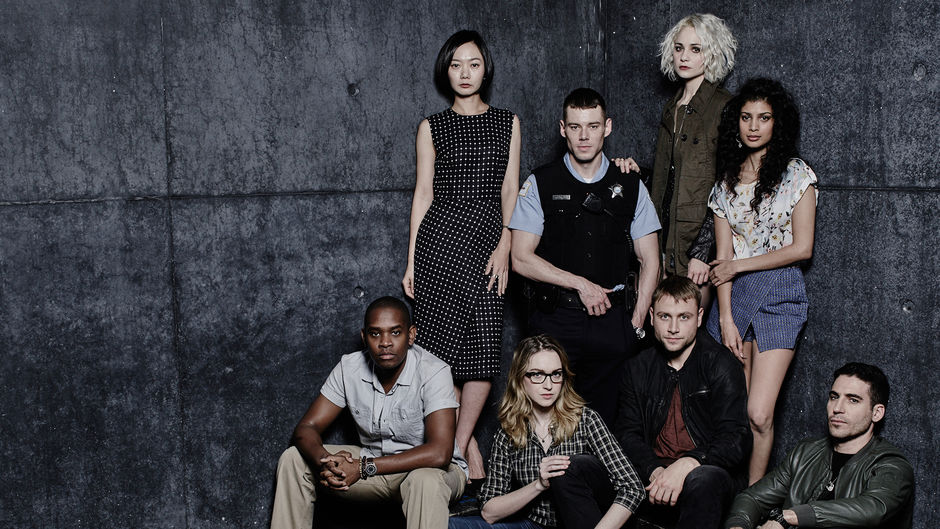
Sense8 S1 Episodes 1-4

I heard about Sense8 about a month or two before the episodes landed on Netflix. The trailer was intriguing, human, and sexy as hell. The buzz around the show was picking up quite a bit of steam on social media, and a lot of people I knew couldn't stop talking about how queer the show would be. Which, of course, was the first step in getting me to the point where I was more than excited to watch it. I started following a couple blogs on Tumblr about it, and everything I saw and everything I read from the showrunners only served to make me more and more excited for this show. I convinced myself that it would be the best thing on TV, and being helmed by the Wachowskis and J. Michael Straczynski, how could it not be? Fast forward a couple months and the first season arrives. I spend a weekend locked in my room watching all 12 hours over the course of two days and it all turns out to be even better than my ridiculously high expectations. I finished the 12th episode with an immediate desire to go back to the first and start all over again. Sadly, the pending release of Orange is the New Black's third season put a slight damper in those plans, but I've just watched the first four episodes again, and I have to say, it hasn't lost it's appeal for me. I think I'm solidly in love with something new and Sense8 has quickly worked its way into my top five favorite shows ever. This is an important development for me because I generally hate the first season of everything. The groundwork and foundation laying parts of storytelling which are always so necessary just aren't my favorite. So I went back to rewatch them in an attempt to find out why it is that those things don't bother me about this show. Hopefully over the course of these reviews, I'll figure that out, or at least I'll just have a damn good time watching the show again.

In an interview he gave Collider (which is well worth reading, honestly; you can find it here), Straczynski said something that shaped my original viewing of the season:
I want people to watch all 12 hours, straight through. If you have enough time on your hands to watch all 12 hours, straight through, that’s the best case scenario. That being said, once we restructured for 12 episodes, we realized that it’s almost a three-act structure. It’s four-episode arc is like an act. So, you could do four and four and four. That’s one way to watch it because there are good break points in there. But, my hope is that they’ll watch it straight through. From our point of view, it’s really written as a 12-hour movie. Ultimately, that’s what it is. When you walk into a movie theater, you don’t walk out half-way through, and then come back the next day to watch the rest of it.
 On the one hand, this can bee seen as a showrunner trying his best to drum up business and get as many people in to watch his show as possible, thusly insuring they get a second season. But I thought of it as something more than that; I thought it suggested that they'd thought about this show in ways that you don't find people thinking about their shows before they air. It's something I lament in a couple of my reviews of the show Empire, they seem to just be going from episode to episode without much thought or structure to the season as a whole. But from what Straczynski said, I assumed that they started with a story on Sense8, and then discovered their 12 episode format around that.

The first three episodes are slow. I realized this when I watched it the first time, but I was engaged enough with the characters to overlook it. In this sense, the pacing felt deliberate to me. A lesser show would try to rush through the character introductions, lay that groundwork immediately, and then hit the ground running. Sense8 wants to take its time, savor the introductions, and try to get you to connect with these characters on a real level. That doesn't mean that they don't paint with broad strokes in the early going like most shows do. But that's inevitable so like with any storytelling medium, you have to give them a little leeway. Will (Brian J. Smith) is a cop in Chicago, and when he finds a shot black kid in a bad neighborhood, of course he goes to save him against his partner's better judgement and of course he stands up to anyone looking to stand in the way of his noble and heroic action. In reality, he's just doing his job, but within the current climate of our increased awareness towards police brutality, it's the show's way of saying "We know he's a white cop in a big urban area, but it's OK, he really is the good guy!" You roll your eyes a bit, but you keep watching.

This is because the introductions that are subtle are more impactful because of it. Kala's (Tina Desai) intro is that of an Indian woman about to get married and having doubts about that marriage. But what's remarkable about that is the way the show skirts around certain cliches. She is Indian, and she is Hindu, but her marriage isn't arranged. The man she's to marry is important, and dreamy, and he chose her, and went about his courting and proposal in the right fashion. Any woman would be happy to have him. But Kala isn't. The show doesn't try to explain why she's unhappy with Rajan in those first four hours. But it does make it a point to say that it's not for the standard reasons you'd assume this woman in this culture would be unhappy with her pending nuptials. In so doing, they immediately paint Kala as a real and complex person, and avoid certain racist stereotypes.

Not everyone is given the same amount of development in the same short amount of time that Kala gets, but there are eight of them, so is it really realistic to believe that they could? Instead, the show is willing to allow the rest to fall into place over the course of those first four episodes; the first act of the movie if you will. Which is exactly where that belongs. In the first two episodes, we learn about Lito's (Miguel Angel Silvestre) secret relationship with Hernando, Nomi's (Jamie Clayton) relationship with her mother and the specifics of her identity as a trans woman, Capheus' (Aml Ameen) difficult life as a bus driver in Nairobi taking care of his sick mother, Sun's (Donna Bae) strained family relationship and her precarious position within her father's company, Wolfgang's (Max Riemelt) criminal activities, and a few things about Riley (Tuppence Middleton). Admittedly, Riley gets the least amount of development in those first four hours in spite of her story starting off with the most action and suspense. Either way, it's eight characters with eight different stories all capable of being the center of their own shows, and yet we get a solid foundation for each of them in the first four hours. It's an ambitious feat for any series, and one that I think Sense8 handles as well as can be expected.

A portion of the credit for that goes into the way the show chooses to introduce and wrap up storylines. Two great examples of this in the first four hours can be found in Nomi and Wolfgang's stories. Nomi falls off of a motorcycle while riding with her girlfriend in the San Francisco Pride parade. She wakes up in the hospital to find her horrible mother still insisting on calling her Michael (her birth name), and partnering with a Dr. Metzger to force her to have a brain surgery she doesn't want to correct a defect she may or may not have. In the first episode, Wolfgang and his best friend Felix race against a rival gang to break into a safe and steal a nice amount of diamonds. It's a tense sequence in which Wolfgang attempts to crack a safe we're told is supposed to be uncrackable. They succeed, of course, and make off with the goods at the very last minute.

It makes sense to introduce these stories in these early moments. The scenes serve to tell us a lot about the characters in question and setup a lot of the story moving forward. And the impressive thing is how they're both granted soft endings in the fourth episode. Wolfgang and Felix steal the diamonds in the first and find a way to sell them in the fourth. Boom, that's done (of course their overall story is only just beginning, but more on that in awhile). Likewise, Nomi's escaping from the hospital and right out of Dr. Metzger's clutches by the end of the fourth episode, but more importantly it also marks the last time we'll really see her mother for the rest of the season. The actions and choices made in the fourth will have consequences for the episodes to come, but if you're interested in the story about this trans woman being held against her will and trying hard to have the people in power validate her identity, and protect her body and her rights to make her own choices about said body, well then that story's been told and now it's time to move on to what comes next.

The other thing that works here is balance; not every story ends in the fourth episode. Lito doesn't have much of a cohesive story in the first four hours, but what will be the major conflict of his story for the rest of the season gets started in the third episode with the introduction of Joaquin. As I mentioned before, Wolfgang sells half of the diamonds they stole and brings some portion of that story to a close, but the selling the of the diamonds only serves to bring more trouble for him and Felix in the long run. Likewise, Capheus finds himself drowning in customers for his van in the wake of the events in the third episode, which seems to signal an ending to his financial and professional struggles. But he's also immediately introduced to Silas Kabaka, a shady businessman who has exactly the medicine Capheus' mother needs and will of course ask Capheus to do something underhanded in order to get it. So where one story might reach an ending, another springs up to take its place and set the tone for much of the rest of the season. The overall effect is that you can stop after the fourth episode if you so desire, but the storytelling is so well planned and executed that you really shouldn't want to. When a question is answered, another question, just as compelling as the first, is asked and the cycle continues. It's simple storytelling 101 kind of stuff, but the deft hand they employ to make it work this early in the show's run bodes very well for the rest of the season and for seasons to come.

If it seems like all there is to talk about with this show is the human drama elements, then that's because at its core Sense8 is a drama. The sci-fi elements of the show are brilliant and important, but they really only serve to enhance the human drama and to offer some really cool kick ass moments. The AV Club reviews of the show lament the early episodes' reliance on ending on major action sequences. And they aren't wrong per se, but I think they miss the point to a certain extent. The first hour ends with Riley in a tense and bloody shootout in a drug dealer's living room while her friends try to rob him. The second ends with Will in a high speed car chase. And the Third ends with Sun using the power of the Senseate bond to "Share" with Capheus and use his body to employ her great martial arts skills to kick some ass. But to say that these scenes are nothing more than perfunctory action sequences to hold the viewer's attention through these slower moments is to miss the nuances of each.

Will's been having a lot of weird things happening to him, and at the end of the second episode, he meets someone who seems to have the answers he needs. The problem is that at the beginning of that episode he was told by a higher authority that this person is a wanted terrorist. So while the scene that follows is a standard action-y car chase through Chicago, the character motivation that fuels it is important. Will had to choose on the spot between his years of cop training and doing what's "right" within those parameters, and listening to his gut to get the answers he needs. He did what makes sense and as a result Jonas (Naveen Andrews), the one person with answers, is taken into custody. It's smarter than your average Michael Bay car chase. It's not action for action's sake, it's action for the purpose of greater characterization. Likewise, Sun's scene with Capheus severs the purpose of showing us what the Senseate bond is capable of. We get a quick rundown of the difference between "Visiting" and "Sharing" from Jonas after he's been arrested, but the fight sequence to end the third episode puts all of it into motion. We see how Sun's abilities can be used by Capheus to help him out of his situation. In the same scene, we also see Will imparting a bit of his gun training at the shooting range. This kind of thing is only possible from within the Cluster, and that fact will be very important later on. But for now, the show gives us these action moments in an attempt to show us these things instead of just telling us.

But as I said earlier, the first three episodes are slow and can be a bit boring at times. So while the action based endings aren't, in my opinion, solely about spicing things up with a little excitement, I do think that they have that effect. And it's a solid and valuable reward for sitting through what otherwise might be an hour of tampered enjoyment. But it all leads into the biggest takeaway from the first four episodes: Sense8 is not a sci-fi action show; it's a drama with sci-fi elements. This fact is brought home in the best scene in the first four episodes, and maybe even the entire season. That's the singalong to 4 Non Blonde's What's Up. It's a fairly standard 90's song that I don't have a particular attachment to, but it's impossible not to have a deep emotional reaction to the sequence. It's simply so very very human. Two of the cluster members just so happen to be listening to and singing this song at the same time (Riley on her mp3 player, and Wolfgang at karaoke), and that leads to it kind of vibrating through all the rest of the members and bringing them together emotionally if not physically as it does Wolfgang and Kala. I think this has less to do with the song in particular, which is a great choice and certainly resonates with the themes of the episode, and more to do with the sheer universality of music in general. I think it's something all cultures share, and having a deep emotional reaction to music is something I'm sure everyone's experienced at one point or another. So you know what the characters are feeling at this moment in time, and you know what it's like to be in a car with friends, or at a concert with a bunch of strangers all listening to the same thing and all feeling close to the same emotion because of it. This scene is the reason you watch through the first four hours. If you make it through the song and you aren't all in for this show, then I'm not fully sure you're all together human.

These are the things I think the first four hours do exceptionally well. What doesn't work as well are some of the choices on when to release information. Lito's story suffers from this in a visible way over the course of the first four. He takes Daniela to a movie premier as his beard, and when she presses for the evening to end in sex he turns her down. This in and of itself is actually a nice moment as it shows that Lito isn't closeted because he's denying his sexuality, he's only showing a straight face to the press so he can keep getting the action movie roles he likes. He's not cheating on his boyfriend, he's simply hiding him away from the rest of the world. It's not that that makes it better, but it does make his story feel different from similar stories on TV. But what fails is when Daniela shows up at Lito's place a few hours later drunk and making a scene so he'll be forced to let her in. What follows is a scene where she barges into his home, makes an attempt to basically rape him, and then runs up to his bedroom without an invitation to find Hernando laying in bed in his briefs. It's a scene that's played for laughs in a lot of different ways, as are most of Lito's scenes throughout the season, but Daniela's insistence and forwardness, which could have come off as nothing more than a female character in control of her sexuality, actually came off as predatory in a way that didn't work for me. If the genders of the two characters were reversed, it wouldn't be a funny scene at all.

In the next episode, we find out that the real reason she was acting that way was because she needed a place to stay since her crazy ex-boyfriend, Joaquin, is looking for her and she's just looking to lay low until things cool down. The truth is that she's in trouble and needs help, but since we don't learn that until after she's introduced to us as a raving, sex-craved, near-rapist, it's hard to have much sympathy for her. If they'd had her find out about Hernando in a different, kinder, fashion, it would reshape our view of the story early on.

Nomi's story suffers from the same problem. Her's is the one with the highest stakes in these first four hours since she's being held against her will and is about to be lobotomized. But the truth is that without knowing anything at all about Metzger, it's hard to take her story seriously. His introduction is handled in a fashion that suggests he's just working on her mother's orders and is looking to perform this surgery for no real reason. That's not the case, but we won't find that out for another episode or two. And when you couple the hospital's actions with those of the Nurse turning Will and the gunshot kid in the first episode away from treatment, you're left thinking that the writers just don't know what healthcare in this country really looks like. It's not legal for any hospital to refuse treatment to someone who stumbles in with a gunshot wound, and it's also not legal for them to hold a healthy adult woman in custody to perform brain surgery on her without her consent. Indeed, if her mother and the doctor wanted to force the issue, they could, but first they'd have to have her declared incompetent or otherwise incapable of making her own decisions, or prove she's a danger to herself or others before they could get that ball rolling. Again it's a situation where information given at a point after these first four hours will shine more light on these events and allow them to make a higher level of sense, but for the time being it has the effect of pulling you out of the narrative. Knowing when's a good time to reveal certain information can be a tough tightrope for a story to walk, and for me personally, Sense8 doesn't do a very good job of getting it right in these first episodes.

But the good far outweighs the bad, and it all left me thinking that sticking with the show would be worth it. And I was right. I think there's a confidence to the show's storytelling. It knows who it is in a lot of ways, and that's something I don't think you get from very many shows in their first seasons. Shows usually have to try on different stories and different scenarios before figuring out what story they want to tell and how they want to tell it. Through four hours, I didn't get the impression that that would be a problem with Sense8. So that's one thing I think this first season has that others don't, but it's not the only thing. I'll review the second act of this 12 hour long movie next time and dig a little deeper to get at one of the other important distinctions that I think sets this show apart and launched it into the space of my top shelf favorites.

Tuesday, June 2, 2015

So You Think You Can Dance S12E1

Survivor is one of the longest running Reality TV shows. Clocking in at a whopping 26 seasons, it's easily become a TV staple that doesn't seem to be slowing down anytime soon. Part of its longevity is due to its two seasons a year format, part of it to its placement on CBS, and part of it has to do with the show's ever evolving format. The core of the game hasn't changed, and when you get down to it, no matter what you think of the show, it's a pretty brilliant game. Strangers forced to live together and work together to succeed are then forced to turn on each other to advance in the solo game, and are then forced to convince the people they turned on to give them votes for a million bucks. The dynamics shift so often and so completely that it can be hard to keep track of, and it's one of the few places where a person can be rewarded for what would otherwise be seen as despicable behavior. But while those elements remain constant over the years, the road to get there has often changed. The way contestants are chosen, who's competing for the 1st time vs who's back again, things like Exile Island, and the dynamics of setting up the original tribes have all be refined, included, and excluded over the years to keep the product fresh. That seems to be one key to making sure viewers keep coming back.

So enter a show like So You Think You Can Dance. It's a show where young people skilled in one specific thing (dance) get together and compete against each other for America's votes and the right to be named America's Favorite Dancer. There's not much room for improvement on the process. Which is probably why in ten years the only major change to the show's format has been the introduction of the All Stars. But coming into the 12th season of the show, we now have an all new format: Street vs Stage! And after this horrendous first episode, it appears to be as bad of an idea as I assumed it would be back when it was first introduced.

Basically, it seems to go something like this: The contestants are being split up into two teams. The Stage team will be comprised of dancers with formal training in the core genres this show is centered around: contemporary, ballroom, ballet, jazz, etc. The Street team will be self-taught dancers in Hip Hop and....well Hip Hop. I know that Hip Hop will ostensibly include things like Krump and Jookin which we get a nice look at in this episode, but let's be honest, on SYTYCD all of those things fall under the Hip Hop category.

It's horribly obvious to anyone who's watched so much as a single episode of this show that the Stage team will have an unbelievably unfair advantage. They're trained and well versed in multiple types of dance, they're being mentored by the great Travis Wall, and they're generally less likely to spend as much time outside of their comfort zones than the Street team is. What remains to be seen in this format is how the pairs will be formed once we get to the top 20. I have a lot of thoughts about the holes in that as well, but I'll reserve judgement until I see what the producers have come up with. Either way, in the 11 seasons of this show, only 3 Hip Hop based contestants have gone on to win. So one team starts out with an uphill battle ahead of them, and that fact should have been obvious to whoever came up with this ridiculous idea.

Also changed this year is the Judge's Panel. Gone is the staple that was Mary Murphy, and brought in on a weekly basis will be Paula Abdul and Jason Derulo. Abdul should be fine; she can't replace Mary who's high energy might have been grating to some, but who was always more than welcome to me. But she's knowledgeable enough to provide observant, if at times too gentle, critiques. Derulo might be the worst thing to ever happen to this show. He was useless, unhelpful, and too complimentary when he guested last season. This episode proves he doesn't have a dance vocabulary to be of any real use to the dancers. Ostensibly, you could say he was brought on to add a Hip Hop strong judge to the critiques, which will be useful under the new format, but I'd challenge you to give me one good Hip Hop observation he made in the whole two hours.

Instead, what Derulo offers is the chance to steal the spotlight and stage time from the people the show is actually about: the dancers. He gets up twice in this episode and goes on stage: once to sing, and once to dance. No one who watches this show is tuning in to see Jason Derulo. But what makes him an even worse judge is his obvious homophobia. Or maybe homophobia is a strong word, he doesn't make any beyond the pail hateful remarks, but he is clearly and unabashedly uncomfortable by effeminate men. There are two moments in this episode where Derulo's disinterest in feminine men shined through brightly, and both of those moments were so inappropriate and uncomfortable that it left me wondering if watching the season would even be worth it. Nigel's come under fire before for remarks that were just a shade too homophobic to have any place on a show like this one, and the big problem with Derulo being on the panel is that he gives Nigel a way to double down on that kind of behavior. I hate to stereotype too much; the fact is that gay men are just as capable of playing sports as they are of being great dancers, but the fact remains that SYTYCD has seen a large number of clearly gay contestants. So why would you bring in a judge who is seemingly so uncomfortable with homosexuality that he can't even be bothered to give the auditions by these people the benefit of his attention?

Of the episode itself, I'll say this: the audition process is lessened by removing the choreography aspect of the audition. Not everyone deserves to go right to Vegas, and not everyone who doesn't quite make the cut deserves to go right home. The choreography aspect of this stage made the complexity of the show and of dance in general more obvious. Either make it or go home is a process that works on American Idol, but not on here.

And as for the contestants, the only person that left a real impression was Jojo. If she makes it through Vegas, she'll be someone to keep an eye on. But what I really want to talk about is the rhetoric around Steven Ban's audition.

Cat starts with a rundown of what is needed to make it on the Street team, and then they cut to Steven. He's a young, lanky, white guy in glasses and with an undeniable nerd quality. This is something he embraces and plays up for the camera; the music he chooses even has a kind of video game quality to it. And it's all anyone can talk about: he doesn't look like your typical Street dancer. But here's the thing, he's actually good. He's not as great as some of the best Animators we've seen on the show. He's a bit static, and his pops and locks aren't as strong as we've seen. But his tricks and his quality of movement proves he knows what he's doing. In any other season, he'd be complimented and enthusiastically sent on to perform the choreography. Here, all anyone can talk about is how he doesn't "look" like a Hip Hop dancer. All of this is coded language for White. They shroud it in talks of him being a nerd, and he is certainly that, but when you get down to it, what it feels like Abdul is talking about when she says he "need[s] the rest of the 'stuff'' to fill out [his] vocabulary" is that he needs to be black.

The odd thing about this is that I don't know where to place it. Is it racist? You can't be racist against a white guy (this is not a point up for debate, if you disagree, I really don't care, it's a simple fact), but by implying that only black guys are fit to dance in this style, you're certainly implying something that feels pretty racist to me. Realistically, it's probably less about race and more about class. Hip Hop is urban, and I'm sure a white guy who clearly grew up in that kind of urban space wouldn't be insulted for trying out for the Street team. Indeed, I'm sure we'll see white people on the Street team, but more on that later. But even if it isn't about Race specifically, and it is about Class, it all boils down to something really problematic: the team makeup of this season is horribly limiting. The people likely to find themselves on one team or the other will fit into small boxes and it will be impossible to break out of them.

This isn't necessarily something new to this season. The Hip Hop dancers who've done well on this show have often been complimented on how well they dance in other styles for a Hip Hop dancer. This isn't often turned against the typically Stage dancers who then dance Hip Hop, or anything they aren't trained in. Contemporary dancers are generally expected to be good at Ballroom too. When they aren't it's surprising, but when Hip Hop dancers are good at ballroom, that's when the judges are surprised. My expectation is that given the increased number of Hip Hop dancers we'll see this season, we'll have to sit through a lot of this kind of thing, and I can't help but to wonder a bit what fuels it. At what point does "untrained" become code for "poor," and then an extension for "black?"

I don't generally review these early audition episodes of the show, but this year I wanted to change that because I wanted to get these complaints out of the way early. I think the best bet for this season, which honestly might be the last the show sees, is that the talent on display overshadows these format changes. And this is possible since the group of dancers seem to get more talented each year this show airs. And that's the claim to fame for SYTYCD. Viewers keep coming back to this show because they're certain to see even more talented dancers, even more breathtaking routines than they did last year. So while format changes might be what's kept Survivor fresh over the years, maybe this is one instance where what's good for the goose isn't good for the gander. Let other reality competition shows change it up each year; all SYTYCD needs to do is deliver on the high quality we've come to expect and we'll keep coming back.

Randoms:

--I don't intend on reviewing another episode until the Top 20 is set, so I should see you in a few weeks. Unless something really dramatic happens and I have too many thoughts not to make a post.

--There's also a review of this episode up over on AV Club. Oliver and I are pretty much in agreement on this one.

--The final tally after the first two cities is 43 stage dancers and 37 street dancers. We'll see how those dynamics continue as things move forward. On one hand I expect the number of street dancers to always be a bit below stage numbers, but this isn't a very big difference, so there's that at least.

--The power failure was a disappointing ploy for drama. Not that the producers created it just for that reason (although I wouldn't put it past them), but the resolution was a bit sad. Or at least the way they engaged with it was lackluster. I would have preferred to see more for this trimmed down, streamlined audition process.

--Or if that day of auditions was really going to have to be cancelled, then I would have liked to see how the show would have resolved that. I think the people who showed up would have deserved a chance to audition one way or another, and if that was just taken away from them, that would have been fucked up.

--Back to the point I made about the probable racial breakdown of each team. I honestly can't see a way around this ending up being the season of black dancers vs white dancers. It's possible that as the auditions leave the South (this week was Memphis and Dallas),  we'll see a bit more racial diversity, but if there's more then two white people on the Street team or two black people on the Stage team, I'll be shocked. This is a problem on a show that has racial diversity issues to begin with.

--The last performer of the episode was interesting. Not him, himself, because I can't remember anything other than his great body and nice looking ass in those shorts, but he was a contestant last year and Nigel asked him "Why do you think you didn't make the cut last year?" I can't remember ever hearing that question asked before, which is surprising given the number of repeat auditions this show gets, but I like it a lot. And the kid's lack of an easy answer means he probably didn't spend much time thinking about what kept him out of the top 20 and devoting himself to changing that aspect of his technique in order to be better this time around. Either way, it's a question I'd like to see asked more often.

Thursday, March 19, 2015

TV Review: Empire Episodes 11 & 12

I think the last two episodes of Empire's first season are the most perfect encapsulation of what this season has been. I know that that might sound a bit like a compliment, but I don't think it's really intended to be. Because truth be told, the first hour in this two hour long extravaganza, "Die But Once," is brilliant for a number of different reasons, but the second hour, "Who I Am," is a train wreck. The Av Club Reviews of this season have often chided the show when it tackles issues surrounding the company or the music industry as a whole, but praised the show's work on the family and character level. In a nutshell, "Die But Once" is all about the characters and the Lyons family, and "Who I Am" in spite of its title is all about Empire Records and hostile corporate takeovers. As such, the writing is on the wall about which episode is the better of two. I also think that it's generally a better idea not to air two separate episodes back to back like this. I think there are a lot of good things to be said about a two-part episode being aired this way, or even two episodes of a show that's more tightly serialized than Empire is (look no further than the last day of How to Get Away With Murder episodes for an example of this). But what we had here were two very different episodes of the show that could have benefited from a week long break in between them.

But first things first, I'm going to try for a little optimism here and suggest something: What if the overall story of Empire's first season is a story about a hubristic man planning to bring his family together and unite them under his singular vision only to succeed in pushing them farther and farther apart? When you look at "Die But Once," that seems to be the suggestion. In the aftermath of Lucious' confession about his paternity of Lola, sending Camilla away, and leaving Andre alone with his illness, everyone (except Jamal, oddly) has just jumped clean off of the Lucious bandwagon. Cookie is off having a romantic weekend with Malcolm in the Berkshires, Hakeem is getting ready to sign with a different label and compose a freestyle that will be a blatant Fuck You to his father, and Andre is ready to turn in his resignation and give his life over to the Lord. Or to Jennifer Hudson, at least, and who can blame him on that front? And so it's in the penultimate episode that we finally see the fruits of all of Lucious' seeming labor. If when he sat his sons down in that first episode and purposed this little competition what he was hoping for was a moment when all of them would be standing shoulder to shoulder to bring Empire Records to the next step, then he was vastly mistaken.

But does that reading of the season track through all 12 episodes? His family didn't seem to be too torn apart at the beginning of that first episode. So what might he have been intending on bringing together? And at what point did we ever see Lucious doing anything that would ever benefit someone other than Lucious? So while I don't really accept that particular reading as gospel, it was the closet thing I could find to a seemingly full story that would have drawn to a close in these two episodes.

But that's to take nothing away from "Die But Once" itself which is a wonderfully engaging and entertaining episode for the show. Everything from Cookie and Malcolm's sexy fun times, to Becky's priceless sass, to Hakeem's revenge worked wonders. But the star of the hour had to be the latest in a season long run of Lucious and Jamal scenes; this one featuring the two of them banding together to make music. It's the honest culmination of their relationship. It's beautiful, moving, and powerful; the song they create is one of the better tracks the show produced all season, and it all can't help but to leave you feeling a bit warm and fuzzy inside.

If there's one downside to the scene, it's that it left me in a state of disbelief that Lucious could possibly have gone all this time without fully realizing just how talented Jamal is. I think the jealousy arc they set up back towards the beginning of the show (and never really touched on again) might account for some of that, but Jamal's been killing it on a level that Hakeem hasn't, and I'm simply not capable of believing that it would have taken this much time for Lucious, musical genius that he allegedly is, to see it. Here in lies the problem with Lucious' cartoonish level of homophobia. If you want me to believe that Lucious might try to deny that Jamal is his son, I'm willing to go with that, but if you want me to believe that because of Jamal's sexuality, Lucious would have spent years and years of his life ignoring his obvious talent, I can't really wrap my brain around that.

It's a powerfully moving scene when watched on its own, but it can take on a more sinister light when pitted against the scene where Lucious tells Jamal to get the rights to his old music by any means necessary. The scene where the two of them are making music is inter-cut with scenes of a murder Lucious committed. And then we see Jamal ready to throw Beretti from the roof in order to get what he wants. The suggestion is that in order for Lucious to fully accept Jamal, Jamal's got to become more like him. It also makes you wonder if Lucious' motivations for going off with Jamal and singing with him weren't this dark all along.

All of this brings us to the point where Lucious names Jamal the next leader of Empire records. These two episodes are written by Ilene Chaiken and Danny Strong, but both of them clarify just how much of Empire was always meant to be an exercise in Lee Daniels' own wish fulfillment. Daniels has been open about his own relationship with his father, and it's easy to see the parallels between his and Jamal's story. So I can't help but to think that Jamal getting the company and finally gaining Lucious' love and acceptance is meant to be something cathartic for Daniels. Whether or not it all rings true is is something I think everyone has to answer for themselves. I don't buy it, personally. I think especially in the wake of the news that he doesn't have ALS after all and won't necessarily be dying anytime soon, I think it's more likely that Lucious would put off making his decision for one more season just to give Hakeem more time to come around and find himself in a position to take over.

But Lucious naming Jamal as his successor is the decision that kicks off "Who I Am" and that leads to some of the most nonsensical moments of that finale. I mentioned before that these two episodes didn't have to be paired together on one night, but some part of me wonders whether or not Fox looked at them individually, saw how ridiculous this last one was, and then paired them together in the hopes that the first episode would carry enough positive momentum to propel viewers through the second and into hiatus without much complaint.

Lucious' decision has been made, the silly competition for who will run the company is over, and instead of allowing the brothers to heal and move past it, it simply incites a new revelry between them. Andre and Hakeem band together to unseat Jamal, and for some reason that isn't at all made clear and that I wouldn't buy anyway, Cookie joins them. Jamal and Cookie's relationship has been nothing but strong for this entire season, and yet in the course of one episode Jamal is pissed at Cookie for even entertaining the notion of killing Lucious, and Cookie seems to no longer think that Jamal should run Empire but that he should have immediately split it with Hakeem as soon as Lucious offered it to him.

Don't get me wrong, that's what I want too. I've been saying for weeks now that the perfect outcome for all of this would be the three bothers running company together. But the ease with which Cookie seems to jump from team Jamal to team Hakeem is ridiculous and it makes me think that she's less interested in her sons succeeding than she is in hitching her wagon up to whichever star will have the most benefit for herself. It's the first time I honestly stopped to wonder if Cookie was actually any better than Lucious at all. I'm also not saying that Jamal needn't be a bit disappointed in his mother for her homicidal intent, but the extent to which he looks shocked and disgusted was surprising to me. I think more of a "Well that's fucked up, Ma, but yeah I get it, he is a total dick after all," would have been more believable. But the look of betrayal on Jamal's face when Lucious showed him the tape of Cookie with the pillow was just a bit much to me.

"Who I Am" suffers, as all the worst episodes of this season did, from Empire's inability to slow the fuck down. It's a breakneck episode rushing through setting up the Empire Records line of succession, the hostile takeover, and Lucious' arrest for Bunkie's murder (yes the same Bunkie that none of us have really even thought about in many many weeks). In its rush to setup some of the foundation for next season, Empire forgot that they needed to produce a strong caper to this season.

The majority of what happens within it is ridiculousness without the excitement of typically good Empire ridiculousness. Vernon dies because little old Rhonda hits him with what looks like a small candle holder in order to get him off of Andre? Give me a break! I neither believe that she's strong enough or that that weapon was hefty enough to do that much damage. It's a scene that reeks of forced drama intended to set the stage for their major crisis next season, but it doesn't feel real or earned by any means.

The scenes where Lucious gets arrested and where Cookie and Anika finally get into the fight we've all been waiting for are far better earned by the show simply because they've been setup from the very first episode. Granted the show forgot all about Bunkie's existence until this week, but it was still a storyline we all knew would have to be addressed sooner or later. The only problem with both of those scenes is that neither of them have any sort of long standing consequences to the show as a whole. Cookie and Anika are agreeing to work together immediately after throwing blows, and we all know Lucious won't be in jail long. So why get invested?

 It's a bit weird that a show so perfectly encapsulates everything it's been all season in two episodes, but there you have it. It was shocking, juciey and entertaining in parts, and boring, convoluted, and nonsense in other parts. But seeing as how this inconsistency is exactly what we'd been given for the 10 episodes prior to these two, should we really have been surprised?

Random Thoughts:

--I mentioned it once but didn't go into details, but Lucious isn't dying after all. Instead of ALS he has Myasthenia Gravis which is actually a real thing. I expected there to be some kind of cop out with his march towards death, but I was hoping it would come in the form of some kind of miraculous new treatment, or some change in circumstances that just caused his symptoms to slow down or something. His not having ALS at all annoys me and I'm not totally sure why.

--Snoop Dogg was great in "Die But Once," and Hakeem's freestyle was a lot more skillful than I expected. It wasn't perfect, but given Hakeem's silver spoon issue and the thought that he would have ultimately bypassed that underground kind of rap battling left me unsure as to how good he could be expected to be.

--Mario Van Peebles and Debbie Allen directed these two episodes. I didn't notice anything remarkable about the direction of either, but I'll have to watch them through a second time to make sure. Either way, Empire's ability to draw in big names both behind and in front of the camera has to continue to be commended. Especially since Snoop Dogg and Patti LaBelle also found themselves in these episodes.

--I'm very sad to see Malcolm go right when he and Cookie were getting started. We'll miss you, Derek Luke. And your great abs too!

--Speaking of which, I think the sex scene between Malcolm and Cookie was award worthy!

--Also great was the Cookie and Anika fight. Partially because it was a long time coming and everything we hoped it would be, but also partially because of how surprised I was that Anika honestly held her own in it. I didn't expect it to be such a close bout.

--The speed with which Jamal seems to start serving his own interest over those of his brothers when he's named the successor is ridiculous and unbelievable. The suggestion seems to be that he's had this darker, more Lucious-like, seed within him all along, but I don't buy that for one second. They could have done much better.

--Going forward, I would love to see Empire finally start to slow down and take its time with more of its storylines, plan its seasons out in advance instead of just playing it episode by episode, and get to the point where its capable of making the business storylines just as entertaining as the family drama. I can't think of anything I'm less interested in than this hostile takeover story.

--Thanks for sticking it out with them through this first season. Hopefully I'll be able to do this again next year with the show's second season.

Monday, March 16, 2015

TV Review: Secrets and Lies: Episodes 1-4

I've developed a new addiction in the last couple weeks. This one to ABC's new drama Secrets and Lies. It's yet another American import of an overseas original. I haven't seen the Australian version of the show, and I can't help but to assume that that's a good thing. Not knowing what similarities or differences can be found between the two series has got to be a part of the reason I've enjoyed the show's first 4 hours. After all, it was the specter of the great Broadchurch which stopped me from being able to watch more than the first 15 minutes of Gracepoint. And here we have another import show based around a young boy's murder, so I can't help but to think that the best way to tackle this series is to go in blind. Having done so, I can say that this is yet another flawed, but supremely enjoyable TV series.

Secrets and Lies starts off with Ben Crawford (Ryan Phillippe) stumbling across the body of his young neighbor Tom Murphy. Distraught over the fact that he just found a young boy's body in the woods, and also by the fact that this was a child he was particularly close to, Ben rushes to call the cops and try to put the wheels in motion to find Tom's killer. Enter Detective Andrea Cornell (Juliette Lewis). Her job, of course, is to find out who killed Tom, but for all intents and purposes she's decided that the answer to that question is Ben Crawford, and all of her work over the course of the first four episodes has been about trying to prove that. What follows is a series of events in which Ben works to clear his name and make sure the finger of blame is pointing everywhere but at him, and Detective Cornell does some of the worst detective work imaginable as she tries to get enough evidence against Ben to make a conviction stick. And, of course, the news that a young boy from their neighborhood is dead and that their father and husband is suspected of the crime tears the Crawford family apart.

What sets Secrets and Lies apart from other whodunit mysteries is that it's not really about solving the mystery. The steps Ben and Cornell are taking to clear his name and convict it respectively are just pathways through which the real story flows. The important thing about this show is right there in the title (subtlety is not their strong suit). This crime and the subsequent investigation serve to out the Crawfords and their neighbors' many different secrets and expose their many deceptions. The family and town drama aspects are the better and stronger aspects of the show; on another series the reverse would be true. Just today I was talking to a friend about this series and she said she doesn't even care who killed Tom, she's just tuning in each week to see what new salacious tidbit will be revealed. And I couldn't agree more because the truth is that no resolution to this story is capable of being as fun or interesting as the things we've seen thus far and still stand to see in the future. The strength of Secrets and Lies is in the journey not the destination.

But for as good as the family drama and the episodic twists and turns are, the basic framework of the show is really shoddy. When they aren't dropping atomic truth bombs, they're fighting against a number of elements that continually pull me out of their storytelling. For starters, no one on the show seems to honestly believe that Ben is innocent. The people firmly in his corner are thus far limited to his youngest daughter Abby (Belle Shouse), and his best friend Dave (Dan Fogler). Dave is a deadbeat who spends the first four episodes living in a kind of mother-in-law-suite in Ben's backyard, so maybe take his support with a grain of salt. Tom's mother, Jess (Natalie Martinez), is also on team Ben, but whether that's because she honestly believes Ben wouldn't be capable of that, or because she still harbors feelings for him after the fling they had which produced Tom (not so incidentally) is a matter that's still up for debate.

But everyone else from the detective to his other neighbors to his wife and his oldest daughter all seem to think he did it. Or, at least in the case of his wife and oldest daughter, they don't seem to be sure one way or another. This surprises me most in the case of the wife and the neighbors. It's not that you wouldn't be sure of Ben's innocence were you close to him, but to think that he was at all capable of this act seems to be a base betrayal. We see Ben interact with people and it presents us with a picture of a man who's got along great with his neighbors for years now. All of a sudden they all think he's a child killer who should burn in hell? That's a big leap to take over night. And as for his wife,  Christy (KaDee Strickland), if she's ready to believe it's at all possible that her husband is a murderer, then why is she still with him at all?

The biggest place where the show seems to be straining credability is in the mystery and the murder investigation aspects. Ben is doing a lot of his own detective work to try and clear his name, and he's oddly kind of good at it. He at least finds Jess' abusive military husband who's on the run from the MP's and kind of from the cops too, and yet is found by Ben after an episode of looking. Ben Crawford is a painter, so where'd he get all these detective skills? Or is it that police work is so easy that anyone could do it? Because if that's the case, then why is Cornell so incapable? I don't think that the show is actually making the point that she is incapable so much as unwilling to look anywhere other than at Ben, but the extent to which she lacks any kind of counterbalancing is odd. No one else in the police department thinks she might be better served using the smallest amount of the effort she's putting into proving her suspicions to maybe look at other options?

Other than that, the show has a few logistical concerns to work out, some bad acting (or at least I think it's bad acting, it could just be poor character development) to overcome, and my overall biggest concern for it: how do you sustain this story over the course of multiple seasons? As I said before, I don't think that the question of who killed Tom Murphy is the central aspect of the show, but it is the skeleton holding all of these pieces together. And if it takes longer than a season to find out who killed Tom, or more importantly to prove once and for all that Ben didn't, then I think we're just in shoddy storytelling territory. But on the other hand, if that particular mystery is solved by the time this season is up, then what? Without the stress of the investigation, without the continued interactions between Ben and Cornell, then what is the show about? Do we stop revealing people's secrets and just start dealing full time with the fallout from those secrets? And even before that inevitability comes along, how long can the show continue to milk this shocking surprise for shock's sake methodology? Everyone has secrets and everyone lies, but for now those secrets are at least novel enough to keep us watching. Eventually they might either stop being surprising or have to get bigger and sillier and juicier just to keep our interest, and that'll put the show in shark jumping territory sooner rather than later. But for now, I don't think anyone is concerning themselves with those kinds of questions. The fact of the matter is the one thing this show does with great skill is reveal big sloppy secrets that can make jaws drop and people gasp with shock and anticipation. If that's their strong suit as well as the focal point of the series, then I'll continue to look forward to how they manage that each week.

Random Thoughts:

--About the bad acting thing, is it just me or is Juliette Lewis just the worst in this? I can't tell if her one expression, cardboard robot routine is the result of bad acting or something deeper going on with her character, but I think we need answers quick. If her character is somewhere on the autism spectrum, then I'd like to know for sure and I'll engage with her differently, but if she's not, then I'd like for her to develop a bit of range and more emotions.

--I hate to put this on a child but there's some odd choices being made with Ben's youngest daughter too. I don't want to think that Belle Shouse is a bad actress, but I also can't tell. I think the problem is probably more of the script's fault. She seems to be written a lot younger than that actress appears to be. A lot of her lines and affectations at least feel like they'd be better on a 7 or 8 year old, and while I don't know how old Shouse is in real life, my guess is around 11.

--Back on the subject of Jess' abusive military husband: I find him to be laughably unbelievable as a villain. He's a super military guy with specialized training who breaks into Ben's house in the night in order to stand over and him and make stupid threats. I'm not saying people like him don't exist, I'm just saying I have a hard time taking him seriously.

--One aspect of the story that I didn't talk about is the core spiral of Ben's mental state as he deals with these accusations. He no longer knows who he can trust, his family is kind of imploding, his teenage daughter is being as teenagery as you can get, and his paranoia is causing him to lash out at those closest to him and do stupid things. It all makes perfect sense and it's ridiculously fun to watch. To the extent that this is a story about how hard and impossible it is to keep it all together in the face of being accused of a murder you (probably) didn't commit, it's really quite brilliant. In fact, after the last two episodes, I'd say that that story is even better than the who's hiding what aspect of the show.

Wednesday, March 11, 2015

TV Review: Empire Episode 10: Sins of the Father

There's a common theme that creeps up in a number of stories and shows and countless other places: It doesn't matter where you start, it only matters what you become. I think it's a quintessentially American point of view. In a country that's founded on, or at least that has greatly embraced the principals that anyone can transcend their parents' station and just pull themselves up by their bootstraps and become anything they want to be, the idea that someone can start as a pauper and end as a prince is not only fanciful but believable. It's a story that I enjoy, but as a method of storytelling, it's something I find suspect. This is because in a perfect world the story would track at a consistent quality and pace throughout. But the world isn't perfect, and sometimes stories stumble out of the gate only to pick up steam in the middle and then rocket home at the end. And sometimes there are stories like the one about Jamal's alleged daughter. It was a horribly problematic beginning, a pointless and mostly absent middle, and then an explosive and surprisingly moving end. So I ask, if two thirds of the story were problems, but the last third totally sticks the landing, does it really matter? And what does this mean for the series as a whole? Empire started out strong, waned a bit in the middle, and now seems to be heading towards an entertaining if disconnected season finale. So what does that mean for the show as a whole through its first season?

I'm not sure about the answers to these questions. Chances are they're all purely subjective, but this episode was so enjoyable that I can't help but to ask them. It's not that I think this is the first episode that's been legitimately good in awhile. It's just that this is the first episode where the good soapy silliness was so good as to make the unbelievable ridiculous moments moot by comparison. Malcolm is declaring his deep love for Cookie after sharing only like three scenes with her and just last week explaining why she's off limits to him? Who cares, I ship it anyway so let's just get on with the sexy fun times. Olivia's back with her abusive boyfriend who's basically come back in order to get her and her daughter back so he can kill them? Who cares so long as we get the bombshell that Lola is actually Lucious' daughter and not Jamal's! The last few episodes of the show have had some fun moments, a few zingers, but no revelations on par with this. Jamal's coming out isn't as big a moment since we've known he was gay all along. Even Andre's psychotic break isn't all that surprising as you could have guessed it was coming since the moment the word bipolar was spoken. But this? You may have guessed that Lola wasn't Jamal's. You may even have speculated that she was Lucious'. But there's no way to guess at the effect that that news would have when divulged in this manner.

And that's the real treat of the episode. The news that Lucious is the father is actually secondary to the fact that he would tell everyone not in a moment of self-aggrandizement, not in an effort to hurt Jamal, but at a moment when he thinks that that information might actually save everyone's lives. Is it a purely selfless act? I'm not so sure I'd go that far, but it's certainly as close as I think Lucious Lyon is capable of getting. And it's this element that impresses and intrigues me the most. Not even half an hour after telling Jamal that Lola doesn't need to be raised "In that lifestyle" (we'll come back to this issue later), he's willing to throw himself in front of a bullet in order to save Jamal's life. If there's one place Empire has been consistent throughout these ten episodes, it's in the complications in the Lucious/Jamal relationship. Lucious seems to hate him, and yet he'd take a bullet for him. Jamal undermines Lucious at every turn, and yet he's ready to sing on the family song after hearing that Lucious is dying. Their relationship goes so much deeper than just gay son and bigoted dad, and that will forever be to the show's credit. I've complained about the uselessness of Lola's presence multiple times since she was introduced four episodes ago, and I stand by those complaints wholeheartedly, but if this is where the show was heading all along, I'll scale back my criticism.

Another story seems to end this week but this one simply fizzles out instead of getting the bang that Lola and Olivia get. Camilla is gone. Hopefully for good, but ultimately who knows. She spends a lot of time this week trying to makeover Hakeem, give him a new sound, and using the word "we" when she's talking about his career, but by the end of the episode Lucious has shipped her back to her homeland not to return until he's dead. On the one hand, I'm happy to see her go, on the other hand what did we actually learn about her, or through her about Hakeem, while she was with us? In my notes while watching the episode, I question who she was, what was her motivation, and what was she getting out of this entire relationship? We can do a lot of the shading in of this character ourselves, and perhaps that's the show's ultimate goal, but I would like to at least feel like the show has the answers to these questions instead of putting it all on the viewer, and I'm not sure I left this episode feeling as though that was the case. It would have been an interesting development had she actually taken the money and we saw that she'd been just using Hakeem all this time to get out of her considerable debt. But she didn't, so it seems as though she wasn't, and if not that then what? Love? Camilla truly loving Hakeem is a possibility that would make sense, but I'm not sure how interesting I'd find it in the grand scheme of things. Either way, what a waste of Naomi Campbell that turned out to be.

There are also two small moments in this episode that reek of the show wanting to make mention of a big issue only to then skate over it and not engage with it fully. The first comes at the beginning of the hour when Cookie makes a passing mention of how bipolar disorder and music therapy are just silly white people nonsense. Here's a moment when the show could fully engage with the problematic manner in which the black community tends to view mental illness and how that often leads to people of color not getting the help they need to make it through such troubled waters. But instead the show treats it as a funny Cookie throwaway one liner and moves on. Even later in the episode when Jamal calls Lucious on the way he ignores issues about his kids that don't fit in with his perfect little world view, it's treated more as just another instance of Lucious' bigotry than the deeper racial problem that it is.

The other moment is in Lucious' conversation with Vernon. He mentions how he would expect the power grab move from Andre since Andre is book smart, but he never would have expected it from Vernon who's street smart and therefore should have known better. The difference between the two and the manner in which Lucious clearly values the latter over the former could be important. It's a subject the show has touched on a couple times now. But yet again it's just a quick one off mention meant to spur Vernon's drug fueled pity party and make him the catalyst for the episode's big climax.

Next week is Empire's big two hour season finale. Based on the preview, I can't say that I'm not ridiculously excited to see what the big soapy drama that will have everyone talking on Thursday will be. But what I'm more interested in is whether or not they can stick the landing. Empire started strong, got bumpy in the middle, and now has the ability to finish strong as well. If it does that, they'll have bookended the first season well, and I think most people will easily forgive the questionable middle passages. But if it simply fizzles out like the Camilla storyline did, then a few people might find themselves questioning why they spent those thirteen hours going along for the ride in the first place.

Random Thoughts:

--I mentioned early on in these reviews that one of the good things about this show could end up being the way it was capable of zigging when you expected it to zag. One place where I would have liked to see that happen is in Lucious' conversation with Jamal about why Lola shouldn't live with him. It'd have been funny if Jamal was assuming he meant he didn't want Lola raised by a gay guy when what he actually meant was he didn't want her to be raised by a poor person in the hood. Still problematic, but since I've recently become exhausted with each new iteration of Lucious' extreme homophobia, it would have been a breath of fresh air.

--I understand the easy interpretation of Lucious coming clean had more to do with him stepping in to save Cookie than it did him stepping in to save Jamal, but I like my reading better.

--When we got around to the reappearance of Olivia, I found myself thinking that she didn't seem to have any of the same manic fire that she did when she was dropping Lola off in the first place. One thing this ending did was give me the ability to re-conceptualize that earlier scene. If her manic presentation was more about a woman stressing out over coming to the conclusion that her only option to save her daughter was to give her away, then I think it makes a bit more sense. It'll be interesting to rewatch those scenes with this outcome in mind.

--With that being said, however, I would have liked to see a bit more emotional distress from Raven-Seymone in the scene where she's about to leave the state. If you're upset you had to leave your baby with Jamal in the first place, maybe you can also be upset that you're about to flee the state and officially never see her again at all.

--Nice work from Jennifer Hudson in her first guest starring episode. The scene where she asks Andre to pray with her when it looks like she's about to seduce him was another nice moment of the show subverting viewer expectations. Although the "Pray your troubles away" approach might fall in the black people not getting the mental help they need category.

--The flashback hair in this episode was just atrocious.

--Ryan left Jamal when Jamal decided he wanted to be a full time father to Lola. It's a development that I honestly don't care about one way or another as I'm not really attached to Ryan and because I'm not at all attached to the idea that Jamal had actually grown enough as a character to make that decision on his part make any kind of sense. But I did like the way they were capable of having a grownup discussion about it in which neither of them had to come off as the bad guy. It places them a step up above Jamal and Michael as much as it pains me to say it.

Thursday, March 5, 2015

TV Review: Empire Episode 9: Unto the Breach

I think this week saw one of the better episodes of Empire that we've seen in awhile, but I also think that the heydays of the show's first block of episodes is officially dead and gone. That's not to say that the show isn't entertaining any longer, because nothing could be farther from the truth on that one. But the revelatory nature of the show's early movements are gone. Gone are the days when I thought we were in for some grand sweeping pronouncements and deep storylines dealing intelligently with topics that we just didn't see being touched on as often in TV. I'm mourning for those (seeming) losses, but still nowhere near close to wanting to give up on this show. Because at the end of the day, even considering the ridiculous lows this show is capable of hitting, it never ceases to be fun to watch.

One of the places the show teeters on the line between important storytelling, and silly soapy nonsense is in the Andre storyline this week. Allow me to start with a disclaimer: I do not have, nor have I lived with or spent an abundance of time with anyone who does have bipolar disorder, at least not to the extent that Andre seems to. All of my limited experience on the subject comes from storylines on other shows and years of watching ER. With that being said, I don't buy the progression of Andre's illness and symptoms this week. I'm not saying that it's impossible; again I have no extensive knowledge of this kind of thing. I'm simply saying that I don't buy it. I don't believe that someone could stop taking their meds and in the course of less than 24 hours proceed from a relatively stable state into a complete manic state such as we see Andre in before the episode's midway point. It's another situation where the show needs to (say it with me now) slow down.

Had Andre gone off of his meds in the last episode, and slowly spiraled into his manic state, this wouldn't be a concern. Or if the episode had taken place over the course of a couple days instead of the one day it's clearly established to have taken place in, this wouldn't be a concern. But when I spend more of my time saying "It doesn't make sense for him to have hit this low this quickly," then my attention is taken away from what he's doing and how the other characters are reacting to same. Which brings us to one of the more pivotal moments in the episode: the elevator scene. I think this scene would be important even without being underscored by Andre's mania since its really the first scene between the three brothers without the divisive influence of their wives or parents. But I couldn't help but to imagine just how much better the entire thing would have played out with more build up to it. What if Andre went off his meds an episode or more ago and we watched a progressive spiraling of his mental state over time? And what if two or three episodes back we were treated to a flashback scene of the boys living in that bad neighborhood and gunshots are heard and Andre is the one that rushes to get Jamal and Hakeem, both of whom are crying, and get them both down on the ground in case more gunshots ring out. And while they're all down there crying and afraid, Andre starts to sing Lean on Me, and Jamal quiets down with tear streaks all down his face, and baby Hakeem even stops squalling to listen. And then you jump to this episode where Andre, hitting the rock bottom of his days long cycle, freaks out while trapped in the elevator and in the midst of his yelling and panicking, all we hear is Jamal and Hakeem starting to sing and beat box Lean on Me, and it calms and quiets their older brother down. The benefits of those changes, of that little bit of per-planing on behalf of the show would have worked wonders. You're welcome, Empire, I fixed the scene.

Not that the scene, as is, is fully broken, per se. The truth is that I watched that scene and felt the intended emotion from it. It didn't bring tears to my eyes or anything (though I think had it happened the way I prescribed above, then it would have), but I certainly understood where they were going with it all and I was able to meet them halfway. All I'm saying is that those little things that the show still isn't doing to the best of its ability takes a scene that could be great and meaningful and important and leaves them just good. Maybe to a certain extent this is just me trying to enforce my own view of what the show could and should be onto it. Maybe Empire has no interest in being great or important on that level. But if that's the case, then I think there's a serious problem with some of what they've leveled against their characters. If you don't have something meaningful to say about living with bipolar disorder, then making one of your main characters bipolar starts to feel like a gimmick. It feels exploitative and reductive to people living with it if the only reason you made Andre bipolar is so that you could have scenes of heightened drama and explosiveness. There's more to a person with mental illness than that, but I'm not sure that there's more to Andre than that. In the end, I feel as though none of the writers have ever dealt with mental illness, and as such, Andre feels like a token. I may be wrong around that, but if I am and if this is something the writers have first hand knowledge of, then they need to do a better job making it feel real and accessible to the rest of us.

The rest of the episode is pretty standard Empire fare. Lucious' bigotry is kicked up a few notches in the wake of Jamal's coming out. It was expected, but I thought the show missed an opportunity here. If Lucious' anger had been based more on Jamal's ability to take one of his old songs and update it, personalize it, and make it into something that was even more successful than before, then I think that would have been a more interesting development than the basic "I'm not going to respect any of the good you do just because you're gay" angle. Cookie's in rare form as she plays a drinking game with a group of men in order to ensure one of Empire's artist doesn't jump ship. She gets in a few great lines with Derek Luke's character, and then is magically sober again a couple hours later and ready to go for a meeting to bring Tiana back into the fold.

Speaking of which, it would appear that my prayers have been answered on the Tiana front, by which I mean that she came back around for another episode. I think the way she's handled in this episode is the equivalent of praying for food and someone handing you a poisoned apple. She's staying with Empire, but there's no real evidence that we'll be seeing more of her in the future, there's no mention of her sexuality (in an episode where Jamal's sexuality is a topic on just about everyone's lips no less), and for some reason that I don't even think the writers understand she wants to get back with Hakeem. Where was it established that she and Hakeem were meant to be some kind of deep forever love? I was under the impression that for Tiana at least their's was always more of a show relationship than anything deeper. Or is that still the case and all she wants is to be back with him for the boost it'll offer her career? Not knowing the answer to this question doesn't bother me nearly as much as my feeling that the writers don't know either.

But for all of this complaining (and really it's a lot more complaining than I originally intended there to be), the episode was fun, funny, and entertaining. The soapy moments are ridiculous, no one believes for a second that Lucious' and Baretti's men would be found in a Mexican standoff in the middle of the streets in broad daylight, but that doesn't make it any less fun to watch. And one place where the show's breakneck speed continues to work for them can be found in the first scene where Cookie outs Anika's backstabbing to Lucious. In another show, this would have hung over the characters heads for a lot longer, but here one episode ends with Anika going to Baretti's office and the next episode begins with Lucious being told about it. It's something I'll continue to respect the show for, I just wished they knew how to balance it. After all, anyone who drives with their foot constantly on the accelerator is eventually going to end up wrapped around a lamp pole somewhere.

Random Thoughts:

--If you want to see what I think of as a bipolar storyline done well, look to Showtime's Shameless. The way that show has been handling Ian for the past two seasons, and the things they were capable of showing with Monica in the first few seasons have just been stellar. The rest of the show is crap, but it continues to get the Ian storyline right on multiple levels.

--Another slight problem I have with the show is that we're only 3 episodes away from the season finale and it still doesn't really feel like we're building towards anything. I'm worried that when everyone looks back at the overarching story of the first season, we'll all be disappointed to find that there really wasn't one.

--Lucious as much as admits that he's tapped Hakeem as the person he wants running Empire when he's gone. This is what I suspected from the beginning as being the only reason the competition was introduced back in the pilot. Andre's got the most business sense and has worked there for years, so he makes the most sense, but it was clear from the start that Lucious wanted Hakeem. Which makes so much of the foundation of the show seem a little faulty in a couple ways.

--But along those lines, if there's one thing I'll continue to say for sure about this story, it's that all three of the brothers running the business together continues to be the outcome that just makes the most sense. The elevator scene confirmed this for me.

Thursday, February 26, 2015

TV Review: Empire Episode 8: The Lyon's Roar

What came first, the Character or the Story? I know it seems like a very writerly riddle, but I do think it's a perfectly valid question. If I have the most amazing story ever told, does it matter if the characters within it are a little bland and two-dimensional? Conversely, if I have the most fascinating characters, can I get away with a story that's a little less interesting? I think the best stories strike a balance between those two forces; placing interesting characters in interesting situations and having them do interesting things as a result is always the best way to go. But in a show's first season, typically, I think we might be more likely to have to choose one or the other. I don't think this is anyone's fault; it's simply down to the logistics of storytelling. How well rounded and flushed out can a character be within an ensemble after only seven hours? So if the character work is improbable after such a (relatively) small amount of time, then the story should swoop in and pick up the slack, right? But if I were to ask you what the central story of any given Empire episode was, could you tell me?

I was bored at work not too long ago and I asked a few friends of mine to name Buffy episodes for me to watch. A couple people responded by telling me that they don't remember the names of individual episodes, so they couldn't really help me. To this I responded, "Simply tell me the story of the episode in question, and I'll tell you the title of the episode." I'm capable of doing this partially because I've watched through Buffy more times than I can count, but mostly because Buffy is a show in which almost every episode is centered around a specific and memorable storyline. This is where I'm starting to think that Empire is facing the biggest problem. Any given week with this show is less about a central storyline and more about a string of things that happen. This week, there's a party, Cookie and Lucious hook up again with Lucious promising to dump Anika, Jamal comes out, and Andre and Vernon work together to try and get Andre on the books as the Interim CEO in case Lucious is incapacitated at any given time, but those are plot points within a story, not a story in and of themselves. So what is this episode centrally about? What is any episode of this show about when you get right down to it?

It's not that Empire hasn't been facing these problems all along. In spite of my praise of the show, these cracks have always been there. It's just that the ride was so much fun before now that it simply didn't matter. "The Lyon's Roar" just isn't fun. Nor is it particularly enlightening outside of a couple small moments. Ultimately, what we're left with is an episode that doesn't really get its characters or its story right, and it's all left feeling messy.

On the character front, I think we need to talk about Andre. This is one of the few Andre focused episodes of this first season, and I think everything suffered because of it. Empire has big and important things to say about art and artists, but as such, it doesn't seem to know what to say about the only non-artistic Lyon in the group. Andre's initial position within the show seemed to be about mental illness, and living with bipolar disorder, but that seems to have taken a backseat as of late.  So all that's left for him is his status as a good business man. But is he even that in this episode? The idea to be the interim CEO comes from Vernon, not from Andre. That seems like a simple enough idea that someone with all the learning Andre's amassed should have been able to come up with much sooner. His next big calculation in an attempt to get the votes he needs to make this happen is to pimp his wife out to one of the board members. This seems like the kind of thing that can work, until the plan goes wrong, Rhonda sees who she's supposed to be seducing, and decides she doesn't want to play anymore. And the closest thing a backup plan that Andre has seems to be calling another board member and simply asking him for his vote, which works out just fine. So why were we put through that painful dinner scene in the first place?

It all boils down to Empire not really knowing who its characters are. And how could they when the characters seem to change at the drop of a hat. One week Andre is a seeming business genius, the next he can't even figure out a way to make sure he can get the votes needed to be named interim CEO to the company he's worked at all his adult life. One week the Lyons are all banding together in the face of the knowledge of Lucious' illness, the next week Lucious is laying bare the long list of problems he has with Andre's wife. The sad thing about this moment is that it's actually a great storyline for Empire to tackle, but it comes so fast out of nowhere that you're only left with a vague feeling of WTF instead of a serious idea of what it all means. Empire continues to be a show with a lot to say, but with very little understanding of the best way to go about saying it.

That is, on just about every topic except for Art and Jamal's sexuality. At this point, I'm left wondering why the entire series isn't just a string of scenes about Jamal being gay and arguing with Lucious and other characters about the importance of Art and Music. The entire sequence of Jamal's coming out is about as perfect as we've seen from the show. From he and Lucious' discussion about why they do what they do (for the music of course, which will live on long after both of them are dead), to the overwhelming support coming from everyone in the audience except Lucious when they hear how Jamal's given a queer edit to the song. The entire audience cheers, the camera lingers on every one of the major characters in attendance, all of them give nods and salutes of approval, and Lucious simply stands there stone faced. It's the culmination of what the show, and Cookie, have been saying all along, and Cookie isn't shy about saying it again: no one but Lucious cares about Jamal's sexual orientation. He came out, he's been a huge story on the 24 hour news cycle, and the world keeps spinning.

But when all is said and done, will "The Lyon's Roar" be remembered as Jamal's coming out episode? Is that the core story of the hour? It's true that the issue of Jamal coming out is brought up early in the hour in the scene between him and Hakeem at the church, and then culminates in the act itself, but I don't know that I feel like there's enough there for it to even be the B-plot of the episode. Especially in the face of the story being teased out over the course of all eight of these first episodes. It feels more like the culmination of a season long story than anything self-contained within this hour. This episode left me feeling like Empire's actual longevity might be in question. The meteoric rise in viewership over this first season will probably be more than enough to keep it on the air through two, maybe even three seasons, but ask yourself this: What will Empire look like upon rewatch, or more specifically on binge watch. When people sit down to either relive this first season, or to introduce their skeptical friends to it during the upcoming hiatus, will they be as impressed and excited as we were through those first five or six hours, or will they struggle to latch onto any of the flat characters or find any of the non-existent episode to episode storylines?

Random Thoughts:

--I'm also really just pissed off at the show's treatment of Tiana. Given the fact that we haven't seen her again since her own big coming out episode, it feels like everything about her only served to further Hakeem's storyline, and I'm sick of seeing interesting female characters sidelined or used as props in a male character's story.

--Unless I'm mistaken, this is the first episode that's both written and directed by Danny Strong. Danny's had some serious writing success lately, and as a Buffy Alum I wish him all of the best, but this was not a very good showcase for his talents. All of the characters basically just say what they're thinking, and there wasn't any kind of special flare to the directing that I could see. I think he should stick to writing, but I also think he can show himself as being a stronger writer than this episode presented him as.

--The White Party at the center of the episode must be a different White Party than the one I'm thinking of.

--I can't express enough how disappointed I am that this is the first we're hearing about Lucious' feelings towards Andre marrying a white woman. I think Andre's self-consciousness about his lack of musical ability has been an undercurrent to the show and the character all along, so that doesn't surprise me, but the thought that he married a white woman and went to school in order to be accepted within white culture is new. As well as Lucious' feelings towards same, and the idea that no matter how hard Andre works for that acceptance, it's not possible. There are so many threads that the show could tease out here, and yet it does a disservice to all of them by speeding through them in that one scene.

--Something else that felt rushed, or at least unearned by the show was Hakeem's statement that he's always felt like Cookie loved Jamal more than she loved him. On the one hand, I want to say that that's a fair and succinct way to bottle up all of Hakeem's anger and frustration towards her, but on the other hand I don't get it. Cookie was in prison for 17 years, all of Hakeem's life basically, but he says she always paid more attention to Jamal than to him. For all those years, was she sending Jamal birthday and Christmas gifts from the slammer and not sending any to Hakeem? She wasn't really in a place, I assume, from which she was capable of reaching out, so what specifically happened to make Hakeem feel that way? Also, why then is all of his anger over that placed on her and none of it towards Jamal? It makes more sense that that feeling of neglect would sour his and Jamal's relationship as well, and yet it doesn't seem to have done so.

--Point to fact, Jamal and Hakeem seem to be great at a number of points in this episode. The scene at the end with Hakeem telling his big brother just how proud he is of him and just how brave he is was the single best moment of the night. That relationship continues to pay dividends.

--What does Jamal having a daughter add to the character or the overall plot and story of the show? So far I continue to say nothing, but it's possible I'm just missing something. It all seems like a horrible waste to me though.