Thursday, July 17, 2014

So You Think You Can Dance S11E8


Forgive me if I gush for a bit over the opening number of the latest SYTYCD episode, but that was absolutely amazing! The hair, makeup, and costumes were superb; the stage was well used and interestingly decorated, and it had one of my favorite elements of group performances on this show: it didn't showcase or highlight any one specific dancer. We've seen a lot of group numbers on SYTYCD over the years, and I've found that my favorites tend to be big, theatrical, and put the emphasis on the group rather than the individuals. I complained last week about the way the opening number was a bit too individualistic for my taste; in a lot of ways, that stems from an ability to look at the stage and be able to call out who's who. I prefer it when the opening group numbers are lacking in that. I think the best group numbers the show has seen have been about a celebration of dance itself and not a celebration of these specific dancers. This can, and probably should, change by the time we're in top 6 territory, or the final performance competition episode of the season, but at this point when it's just about 18 people showing what dance is capable of, I'd rather not be sidetracked by noticing any one specific face in the crowd. Even if we ignore that specific quirk of mine, I think this opening number stands up. It's clear and fun, the idea behind it is obvious without being too simple or overdone (something that's been a bit of a problem this season), and as expected it's danced wonderfully. Nigel mentions that the choreographers of the routine (I believe their names were Pharcyde and Phoenix, but I'm not certain as my eyes were on my computer and my gushing notes at the time) are part of a dance crew. It left me wondering whether or not the element that pushed their number over the edge was the fact that dancing with a group of people is their specialty? Maybe the other choreographers on the show are more at home creating routines for pairs or smaller numbers? Whatever the reasoning behind it, the result is the best opening number the season has seen thus far!

Now that we've got that out of the way, welcome to the 8th episode of So You Think You Can Dance; 18 contestants enter, only 16 shall leave. Misty Copeland is back to be her perfect and helpful self, the judges are sitting in the wrong order for some reason (I wonder if Misty complained about Mary's yelling?), and we've got a lot of fresh blood in the choreographer pool. So let's get right down to it.

Jourdan is the only person in danger for the second time in a row, which doesn't bode well for her, and Stanley was doomed after that horrible Spencer Liff routine, but the rest of the bottom keeps to couples. Apparently, fans didn't connect with the Hip Hop routines from last week, and Bridget and her partner Emilio find themselves in trouble with Emily and her partner Teddy.

Once that news sinks in, Jacque and Zack are ushered out to perform a Hip Hop routine from Keone and Mari. A lot of importance and attention is paid to the intricate hand articulations worked into the routine, and surprisingly enough that was the weakest element to the number for me. After two weeks, I feel like the dancers seem to be most out of their element within the Hip Hop genre. The small things like articulations and animations are lost on them and look out of place, but by no means does it diminish a great performance. Specifically because if there's one thing these two are good at, it's performing. Nigel praises Zach for his ability to throw himself fully into anything he's been given, and I think it shows in the best way possible. This might not have felt like a Hip Hop routine (indeed, I wonder if you were to show it to someone without context and asked them to define the genre, would they guess Hip Hop before something like Jazz?), but you can see the way Zack gives it his all and has fun with it, and that makes it an enjoyable routine even if it isn't textbook Hip Hop. Likewise, Jourdan also brings her extreme skill for performing to the table and wows everyone. The judges say they don't think she looks like a Ballet dancer here, and I can't say that I agree with that. Personally, I thought there was still a small amount of "Ballet dancer doing a Hip Hop number" in her quality of movement, but it didn't matter. Whatever the two of them might have lacked in textbook Hip Hop technique, they more than made up for in personality and performance, and I actually think that that's a better compliment than them being told they didn't look like the kind of dancers they are.

If Jacque and Zack are the couple with more personality than technical ability within their assigned genre this week, Jourdan and Marquet are the couple with all technicality and no personality. I thought this week's moving Dee Caspery Contemporary number would be the vehicle with which Jourdan might save herself. After being outshone in her Pas De Deux with Jacque in the first week, and then making the wrong choice performance wise last week, I thought there was no way she could go wrong with a routine that seemed designed to grab votes. And then I was proven wrong. The Judges point out that both Jourdan and Marquet are having connection and possibly even chemistry issues. Nigel tells Marquet that after 2 weeks he still doesn't even know who Marquet is as a dancer, and Misty points out that Jourdan's face isn't matching the intensity with which she dances. They also mention that there are technical problems with Marquet's partnering, which explains why his lifts all look so shaky and labored. To the couple's credit, I enjoyed their dancing this week and thought they approached the piece from a very technically sound place. But I have to agree that they're lacking a certain "it" factor, and that has to be found in the performance aspect. I originally thought that the judges' remarks were more about setting the stage for Jourdan to go home later on, but after watching the routine a second time, I think the criticism is warranted.

Jessica and Stanley are the only new couple of the night and they're seemingly punished with a nonsensical Tyce Diorio Jazz routine. For some reason, Tyce thought it would be a good idea to create a routine about a couple on a magic carpet. No story, no play on quality of movement, just two people dancing around on a carpet. I've always found Tyce's numbers to be hit or miss, and this one is certainly a miss. Stanley jumps around and does what he does best, showing off his wonderful elevation, but other than that there's nothing remarkable about the routine at all. Misty again takes the time to talk to the contests about what their faces are doing during the numbers, this time to tell them both to take it down a notch, and Nigel points out that Jessica hasn't been dancing up to the level set in her performance with Ricky a couple weeks ago. It's starting to look like a lot of what we see about Jessica will be a roller coaster of highs and lows until she finally goes home. I'm just wondering if that will be sooner or later.

Bridget and Emilio find themselves with a Jive choreographed by Pasha and Anya and set to Pharrell Williams' Happy. True to song's title, I couldn't stop giggling the entire time. These two looked like they were having the time of their lives out there. My favorite moments of the routine come when Emilio tosses Bridget into the air and then catches her "in second" (as Nigel puts it), and towards the end when Emilio is allowed a few moments to toss a few of his great Hip Hop tricks into the piece as well. I'm not sure if the two of them found out they were in the bottom three and then decided to come out and dance like their lives depended on it, or if they decided to just come out and have as much fun as they could before possibly going home, but whatever the thought process was, it worked. Mary points out that the technique could have been a little cleaner, and Emilio's retractions a little faster, but I didn't notice it. While watching, I was actually complimenting them both on how well they danced those elements, so that goes to show how much I know. Either way, they seem to secure their place in the competition for next week with this one.

Tyce Diorio's second number of the night falls to the other couple in the bottom: Emily and Teddy. As I said earlier, Tyce routines are either hit or miss for me, and I think this one is much more of a hit. It's yet another Contemporary concept we've seen before with the couple desperate to remain together. As much as I might want a little originality and innovation from the Contemporary choreographers, I also recognize the merits of "If it ain't broke, don't fix it." My immediate notes on the performance read thus: "The judges are all praise for these two, but the comment I agree with the most is Nigel’s statement that the two of them came close to touching the viewer’s spirit in their movement. Because for me this was a close but no cigar kind of performance." I bring this to your attention specifically to point out the fact that I just watched it for the second time and it brought tears to my eyes. I was wrong in thinking that this was a middle of the road kind of performance which relied more on the implied emotion of Tyce's choreography. In fact, this was everything the judges claimed it to be: deeply moving, wonderfully choreographed, and danced with an unparalleled passion. All of which is heightened by the use of Nina Simone's haunting Ne Me Quitte Pas for the music. Cat points out that there seems to have been an elevation in the performance level from the two between rehearsals and now and points out that the two of them finding themselves in the bottom must have pushed them to work harder. I don't know what I didn't see in the performance on my first watch through, but I hope that the voters did see it and that this couple is rewarded by being safe next week because they certainly deserve it. 

Brooklyn and Casey find themselves with a Bonnie Story Jazz number about two kids at prom. I have one odd problem with this routine: if the story is about a kid who's enamored with a girl and really wants to ask her to dance, why does the couple start out already holding each other for the dance? I felt like Bonnie missed the opportunity to present some of the play up to that moment in the choreography. But with that being said, I couldn't take my eyes off of Casey the entire dance. This is proving to be a very evenly matched couple in a lot of ways. Last week it was Brooklyn I couldn't take my eyes off of as she showcased a maturity and sexiness in their Argentine Tango, but this week she fades into the background while Casey's star ascends. They also have a nice chemistry with one another. Casey's smile also goes on for days and those beautiful teeth work overtime, so he's should be a shoe in to pick up the swooning teen girl vote which tends to dominate the show. I expect these two to be around for quite some time.

I'm not sure what I want to say about Valerie and Ricky's Viennese Waltz besides WOW. In the interest of fairness, the Viennese Waltz is my favorite of the Ballroom numbers we tend to see on this show. The smoothness of the movement, the grace of it, the oddness of the posture, and the fact that they're almost always coupled with excellent wardrobe choices combine to take my breath away every time. And this week was no different. If there's one thing I took away from the number, it's that this is the first time that Ricky's been slightly outshined by his partner. Valerie was the star of the number and I couldn't take my eyes off of her. There was an element of wish fulfillment to the entire thing: The girl who gets to dress up like royalty and dance the most beautiful, captivating dance with the cute boy. I don't know if that's a fantasy she's ever had, but I felt like her performance captured that idea in a beautiful way. With that being said, I think a lot of that is made possible by Ricky's excellent partnering. Valerie dances beautifully, and Ricky's there to stand by her and present her to the audience in the best way possible. And if the final moments when the two of them are on their knees and he pulls her up to his chest doesn''t make your heart just melt, then you're made of stone.

I think Luther Brown's Hip Hop number for Carly and Serge proves that the originality and innovation we used to get from Contemporary numbers has found its home in Hip Hop. The two of them play skeletons in an interest, I assume, to play with body movement. They bounce and tick around stage like loose bones missing the muscle and flesh that hold it all together. I think the two of them do a good job performance wise, both affecting a kind of dead, expressionless look, but the dancing edge goes to Carly. Serge is far more upright and straight backed during the whole thing while Carly gets lower and a lot looser. Of the two of them, she's the one that really brings out the skeleton quality in her movement.

Tanisha and Rudy close out the night with a Warren Carlyle Broadway number. In case it hasn't been made clear before now, let me say that I really don't like Rudy. I find him goofy in a manner that I don’t find to be at all endearing. He's easily the least talented of the guys this year, and considering the fact that the guys are quickly distancing themselves from the girls as the more talented group, his lack of formal talent feels like even more of a blight to the show than it would in previous seasons. And I feel like the producers are constantly trying to force a story on him so that his abundance of personality can be highlighted and his lack of dancing ability can be overlooked (more on this in the strays). With that being said, this was the perfect number for him. It was something that allowed his energy and his personality to shine through without requiring a high level of technique. Tanisha proves again that if it’s technique you want from this pair, you’ll have to get it from her. She’s wonderful within it, but I felt like her superb technical ability held her back while Rudy's reckless abandon suited the number more.

In the end, Jourdan and Stanley go home. Nigel says they stuck to the voting this time around so as not to take the blame make a difficult decision. But I think it was just a perfect storm sort of situation where the voters made the same decision that the judges would have made anyway. Jourdan was in the bottom two weeks in a row and didn't exactly wow anyone this week, and Stanley was hampered by two weeks of bad choreography. I feel bad for Stanley because I think any of the guys (with the possible exception of Ricky) would have found themselves in his shoes had they been given these two routines in back to back weeks, but I also don't think the show is losing someone it can't manage to be without.

Stray Observations:

--Sorry for the delay in getting this posted. I usually try to have something up and ready to go (at least a rough draft of something) Wednesday night. But after doing that two weeks in a row, I've seen that it keeps me up a little later than I would like. So in the future, I'm going to make my notes during the episode, go to bed, and then watch the episode again the next day while I write up the review. This will give me the chance to reevaluate performances (hopefully resulting in a better idea of what to say like it did for the Emily/Teddy number this week. I can't believe how much I would have put my foot in my mouth had I went with my original notes) and also tackle it with a little more of a rested mind. The trade off is that I can't write up the episodes until after I get off work Thursday evening.

--It's always tough making predictions on who'll be in trouble next week. I didn't do it last week because I found most of the performances to be equally lack luster. This week, the best I can figure is Serge, Marquet, and Jessica might be in danger. Jessica might suffer for Tyce's bad magic carpet routine, just like Stanley suffered this week for Spencer's bad routine last week. Serge just wasn't good or memorable enough for me, and I think Marquet might suffer for not connecting with the audience enough. But I have no idea who might be joining them and I wouldn't be surprised if I was totally wrong.

--Speaking of Marquet, I'm very curious to see if him and Jessica have more chemistry than he and Jourdan did. I can imagine that both of them will be dancing with something to prove next week after the critiques they got this week. And if they both find themselves in the bottom, then it'll be all the more reason for them to bring it.

--Did anyone else get a glimpse of Eliana in Jacque's performance this week? Not in talent level per se, as I think Eliana was a bit better, but with the feeling that Jacque could start to emerge as the best girl in the competition at just the right time and then coast on through to the final. I think she's well paired with Zack, but she's starting to strike me as the kind of contestant who might shine even brighter when she's paired with an all star.

--About Rudy's continued fishing for a storyline: This week, everyone decides to make a big deal out of some level of flirtation that's been taking place between him and Jacque. Either the two have started dating or it's just some cute harmless infatuation for the moment, but either way in both of their respective segments it gets brought up and Cat can't help but to titter and play match maker. I'm already bored with this story.

--The judges mention Teddy's a  Hip Hop dancer again while praising him for his excellent Contemporary performance. Give it a rest, guys. He does better here than he did in his two previous Hip Hop numbers; Hip Hop is clearly not his primary style. Or if it is, he's not nearly as good at it as he is other things. With that being said, his performance tonight might be the first we've seen this season that's destined to be redone in the season finale.

Wednesday, July 9, 2014

So You Think You Can Dance S11E7

Sometimes I watch this show and I worry that I've become somewhat jaded with it. It's not very often that this happens, but on an episode like this where I felt seriously underwhelmed by the majority of the routines, I can't help but wonder if that's not why. Or if my ignorance about dance (even after watching this show for 11 seasons) is the culprit. But either way, I was not impressed.

At the top of the show, it's revealed that Brooklyn, Jourdan, Malene, Serge, Nick, and Casey, are the contestants in danger of going home. Which at least means I was right in calling Serge, Jourdan and Brooklyn for the bottom last week, so yey me. I think it also means that this won't be the season of the Ballroom dancers no matter how much the producers and judges wanted it to be. It's also possible that given the sheer amount of Ballroom contestants on the show, it was inevitable that a lot of them would end up on the chopping block early, but I can't help but to think that it's meaningful that four out of the six dancers in the bottom are all Ballroom trained, and they find themselves in danger after a week where they all danced their own styles. But maybe that's just me.

The night started with a group Broadway number from Josh Bergasse which I liked enough, but found to be tonally odd for this point in the season. There wasn't much in the way of group work to it, and I thought moments of it were oddly individualistic (the section with Emilio and his bat and even the extended opening sequence with the three boys in their sailor outfits come to mind), and the rest seemed to feature a lot of people walking around on the stage. I understand the intention to capture some of the business that is New York, but I would have liked something a little less chaotic, or at least something that felt like a more controlled chaos.

It's closely followed by Tanisha and Rudy's Jazz routine from Sonya, and I wasn't impressed with that either. Wardrobe's choice for Rudy was just odd. And that would be fine if I could have been distracted from it by his dancing, but once again I felt as though he was perfectly outshone by his partner. Where Tanisha was clean, vivacious, and mature in her movement, Rudy seemed to be labored (especially in a lot of those lifts, which will become something of a theme tonight) and very young. The judging kept along those lines with Mary commenting on how Rudy needs to work on his physical strength, Misty Copeland (who is absolutely amazing of course) commenting on his need to work on his partnering a bit, and Nigel complimenting him on being better than he actually thought he would be, but everything seems to point towards Rudy not being strong enough to have made it to this point in the competition. The judges seem to have put him through on strength of personality more than skill and they're banking on that getting him pretty far. It's a winning bet thus far as he escaped being in the bottom three this week and I'm assuming will be safe next week as well, but in a season where the boys seem to be a lot stronger than the girls, I'm wondering how long he'll be able to coast by on a winning personality and lack of talent.

There was a conversation on the AV Club comments for the review of last week's episode that Contemporary seems to have hit something of a wall on this show. With Mia Michaels and Wade Robson lost from the collection of choreographers, some viewers feel like the genre has been lacking in originality. Personally, I agree for a number of reasons, and chief among those reasons is Travis Wall's routine for Valerie and Ricky tonight. It's not that the routine isn't good because I don't think that Travis Wall is capable of turning out a bad routine, it's just that I feel like it's something we've seen a million times already. If I have to watch one more routine that ends with one of the dancers trying to hold onto their partner while s/he walks away from them, I'm going to scream. But that's to take nothing away from Ricky and Valerie's dancing of the piece, which I thought was excellent. Ricky continues to show the poise and strength that marks him as the clear cut favorite at this early point in the competition, and Valerie holds her own. She's out of her element as a Tapper, but that only shows in certain performance elements to the dance and not in her technique. These two could become a power couple in the weeks to come, but if they're going to do that, I think Valerie will have to pick up her game just a little bit more. We'll see how well they work together when they're both tossed out of their comfort zone with a Ballroom or Hip Hop number.

Ricky was in his element for a second week in a row with that Contemporary number, but he wasn't the only one. Emilio found himself dancing Hip Hop once again, this time with his more permanent partner Bridget. It's interesting that his partner from last week's number, Teddy, also finds himself dancing Hip Hop again this week (with his new partner Emily). I don't know if the producers were trying their best to keep as many of the contestants within a comfort zone as they could to ease them into the competition or if it was just the luck of the draw, but people dancing in the same style for a second week in a row was noticeable. Emilio held his own despite another bad wardrobe choice on the night. Nigel says the outfit makes him look like a dancing hobbit, and I have to agree. Bridget, on the other hand, does her best but her weakness within the genre shows. She needs to get lower and loosen up and add a little bit more attitude to her movement if she wants to sell the Hip Hop. It's a lot of the same problem that Emily has with her performance later on in the night. The difference between these two Hip Hop numbers ultimately being the guys. Where Emilio is totally within his element tonight, Teddy struggles until the song (Don't by Ed Sheeran which marks the second song from him this season, and I couldn't be happier as I'm totally in love with him and his new album) reaches the chorus. I couldn't tell if he just needed time to find the groove, if he was dancing down to his partner, or if he just needed to shake off some nerves, but the beginning of the performance left me feeling like he's not nearly as much of a Hip Hop dancer as the producers are claiming. He's more comfortable within the style than a lot of dancers we've seen in the past, but he lacks the ease and comfort with the material that we're seeing from Emilio this year. Both performances are good, but neither is great.

The first thing I took away from Jessica and Nick's West Coast Swing was that Jessica's shoulder popped out of its socket and back in during rehearsals. To which I say, Fuck that shit! She wraps her shoulder with an ice pack and keeps learning the steps. I go home from work if I'm unlucky enough to get a paper cut, and this chick kept learning choreography after she momentarily dislocated her shoulder. I'm ashamed of myself and impressed by her; that's dedication. Sadly, all of that dedication didn't translate into a good performance for either contestant. The two of them have little to no chemistry, the lifts look labored, and the routine is totally lacking the level of fun that Benji tried to infuse into his choreography. Nigel says Benji's routine was too tough for the dancers, but I'm not sure how I feel about that. On the one hand, yes it seems like a difficult routine and I'm not sure who could have excelled at it. But on the other hand, I didn't realize the point was to take it easy on these guys. Nigel's statements put me back in mind of the possibility that so many people finding themselves in their own styles again this week wasn't an accident, but who knows for sure. Either way, the outcome is the worst danced performance of the night, which doesn't bode well for Nick since he's one of the guys in the bottom.

As stated earlier, Nick is joined in the bottom by Serge who partners with Carly in a Contemporary routine (Sonya's second routine of the night). This is a routine that I thought was danced wonderfully well by both contestants, but I didn't feel anything over the performance aspect of it all. Sonya spends a lot of time explaining how emotional she wants it to be, and so I watched it waiting for the moments when my heart would skip a beat or I'd get goosebumps as always happens on the best routines of the show, and I felt none of that. Clearly, I might be in the minority on this point since the routine moves Mary to tears and gains high praise from Misty, but I didn't connect with it on that level at all. But I don't want to take anything away from the technique Carly and Serge brought to the table because I thought that that element of it was very strong indeed. It's possible that the shock of finding himself in the bottom got to Nick and effected his performance for the worse. Conversely, Serge being told he was in danger seems to have elevated him to new heights. Or maybe it was his much higher level of chemistry with his partner this week. But either way, he danced like someone interested in preserving his place in the competition.

While Nick and Jessica's might have been the worst danced performance of the night, Malene and Stanley's Broadway number from Spencer Liff is the worst choreographed. He gives each dancer a phone with a long cord leading off stage (which is the first mistake: when was the last time anyone saw a phone with a cord? There are people watching this show too young to even remember there was a time when phones had cords) and asks them both to move around, mostly independently of one another, with them. There's a lot of twisting themselves in the cord and then untwisting, and odd moments of going over and under the cords for whatever reason. Misty points out that there are a number of times in the routine when they seem to be dancing totally different numbers from each other and she couldn't be more right. The entire thing holds both of them back, and doesn't showcase either of them particularly well. This is especially a problem for Malene who is in the bottom this week and really needed to shine.

Jourdan and Marcquet are given a Jazz number from Sean Cheesman about an interrogation which looks like a much lesser version of this Sabra and Neil negotiation piece from season 3. The piece starts off a little rocky with Marcquet picking Jourdan up off the ground in yet another labored lift for the night, but once the two of them get into the middle portions of the dance, they have a synchronicity that I found to be impressive. The entire number is marred, for me, by an odd power dynamic. If the story is one of an interrogation, it stands to reason that one of them (in this case Jourdan) should have more power than the other, but the two of them performed in a manner that suggested they were equals. Nigel points out the way the Jourdan should have played the role in order to convey this point better. But Cheesman also mentioned that he wanted them both to throw themselves into the piece with something of an aggressive abandon, and they did that, but for this entire piece to work, I think they would have been better off making Jourdan more dominate and Marcquet more submissive.

I was worried when I saw that Brooklyn and Casey were a couple because they both were in the bottom this week. Granted, I'm not sure Casey really deserved to be in the bottom (a point Nigel also makes when talking to the boys at the end of the show), but there's the possibility that the voters simply didn't see enough for him to make them want to pick up the phone and vote for him. And in the past, the judges haven't been shy about sending couples home when the two of them find themselves in the bottom so as to avoid shaking the pairs up too much. With that being said, I was very pleasantly surprised by the couple's Argentine Tango tonight. I think there was a slight lack of comfort from Casey as he danced out of his style this week, but it was easily overlooked in the face of how brilliant, and seriously sexy, Brooklyn was. I think the pair of them had an interesting chemistry. Brooklyn was a little more mature in her movement than Casey was (she's actually complimented for her surprising maturity in the judging), but the two of them played off of one another exceptionally well. This could be a couple to watch going forward.

Jacque and Zack cap off the night with my personal favorite routine: an African Jazz number by Sean Cheesman. It's becoming clearer and clearer to me that Zack might be the only boy in the competition that could give Ricky a run for the title. He didn't get showcased much during callbacks, but when we did see him, it was with the judges praising his abilities in other styles. That continues in this leg of the competition. Neither he nor Jacque could be farther out of their element with African Jazz, but both of them compose themselves exceptionally well. With her being a Ballerina and him a Tapper, they'll be the couple that's dancing outside of their styles every single week, and if they continue to do so as well as they did this week, I imagine we'll never hear the end of it. It's something that ensures they'll continue getting glowing praise from the judges while also picking up votes.

In the end, Nick and Malene go home, and given the routines of the night, there's really no other choice for the judges to make. To an extent,  both contestants are done in by their choreography this week. But this is truer for Malene than it is for Nick. Nick's not a West Coast Swing dancer, and I don't want to make it seem like all styles of Ballroom are the same, but I think he had a much better shot at performing Benji's choreography well than Malene had with Spencer's. No one could have survived Spencer's routine, and if Stanley finds himself in the bottom next week, then we all have to admit that we know why.

Stray Observations:

--Nigel says that Malene's beauty carried her a lot of the way to this point in the competition. I honestly don't know what to say about that. This isn't a beauty pageant, so if dancers are in the top 20 just because they're pretty, that's no one's fault but your own, Nigel.

--In keeping with the Storylines to Watch idea, I'm very excited to watch Zack and Jacque and Randy and Valarie duke it out as favorite couple from now til the top 10. It's the two Tappers paired with the best Ballet dancer and the best Contemporary dancer in the competition so there's an interesting parallel there. Also it seems like the recipe for success for them will be Valarie bringing herself up to Randy's talent level and Zack being expected to make Jacque a little looser and more fun/relateable.

--As a followup to last week's projected Nick and Rudy storyline, I would like to point out that when it was announced that Nick was going home, the camera did cut to Rudy's excessive crying. So there's that. I still expected that to play out over a longer period of time though and I certainly didn't expect Nick to go home before Rudy did.

--Nigel mentions that this year they're going back to allowing the voters to decide who goes home after we hit the top 10, so thank God for that small favor. I've been bugged by the judges continuing to make final cuts all the way until the end for the last couple of seasons. At a certain point in time it has to be about finding America's favorite dancer, meaning they have to stop making these decisions for America earlier than the last couple weeks.

Wednesday, July 2, 2014

So You Think You Can Dance S11E6

When the reality TV craze started, I was one of many who refused to be taken in by it. I swore I wouldn't be watching any of that crap in favor of sticking with my fun, wholesome, artistic scripted TV. I held out for awhile; a couple seasons passed before I watched a single episode of Survivor or So You Think You Can Dance, but the truth is I've been hooked ever sense. A lot of my reality TV love has died out, much as the genre has been slowly dying for awhile, but I still look forward to the summer every year for no reason other than watching another riveting season of SYTYCD. There are two things that draw me to SYTYCD, and oddly enough both things also factor into my deep seeded love of sports: 1) the extreme talent and athleticism on display week after week. I love seeing what the human body is capable of achieving when pressed to do so. 2) my love of narrative. I tend to be alone in that last one (none of my football friends are ever as interested in discussing the narrative implications of a team's journey over the course of any given season), but I can't deny that I love the way these kid's experiences week after week craft their own unique narrative. It's the latter that I'm most interested in engaging with here, but I'm sure we'll talk about the sheer skill and talent of the dancers as well. Simple disclaimer: I'm not, nor have I ever been, a dancer; if you're looking for someone capable of engaging with these performances from a technical standpoint, I'd highly suggest reading Oliver Sava's reviews over on The A.V. Club when they show up (which will be sporadically over the course of the season). I simply approach this show from a kind of "I may not know dance, but I know what I like, and I do know narrative," standpoint.

Along with knowing what I like, I also know what I don't like, and the opening number for the evening falls pretty firmly in that category. After last season kicked off with the fabulous Puttin' on the Ritz number from Nappy Tabs (shown here), I was ready for something bigger and better and more expansive this season. Instead, Sonya Tayeh delivers a routine about hats or something. All the contestants are grouped around the center of the stage exchanging hats like they're in the middle of Waiting for Godot. It's ultimately this early stagnation that ruins the number for me. Where last year's Puttin' on the Ritz made use of the entire SYTYCD studio, this year's number spends a lot of time seemingly standing in one place. Once the dancers start moving around a bit, it gets a little better, but ultimately I wasn't impressed, and I was surprised to hear it was Sonya who had created it. I tend to expect more from her.

We're introduced to the top 20 for Cat's first roll call, and I was kind of surprised by just how many of them I couldn't remember being introduced to before now. I've long thought that SYTYCD has done a great job of balancing it's storytelling (if that's what you want to call it, and it is what I want to call it) in those early audition and callback episodes between interesting contestants and the contestants sure to make it to the top 20. It's often impossible to tell if the person being spotlit early on is getting so much focus because they'll make it to the competition or just because they had an interesting couple days in Vegas Pasadena. But I feel like in past seasons it was about 50/50. This year it seemed like a lot of the people we were spending time with in callbacks were going home at various stages without making it to tonight's showcase episode, and that feeling was typified when I realized I didn't recognize almost anyone being announced by Cat.

This year, the typical Top 20 Showcase episode that kicks things off is serving both as a way to allow the voters to get to know the dancers and as the first step in the competition. So everyone is paired with a fellow dancer in their own style, given a routine that suits said style, and dances for votes. For the most part, I think this is the wrong decision for the show to make. I’ve loved the showcase episode since it was introduced a couple seasons ago, and I think it works best as a more laid back celebration of dance and introduction to these guys in their own style than it does as a part of the competition. But on the other hand, I understand that the show is still trying to navigate it’s one episode a week format, and I'm guessing things were streamlined here so they didn't feel like they were stuck with a week without meaningful performances. Or maybe the show was cut back from the 18 episode run time it had last year? Either way, everyone's still dancing in their own style, per usual for the Top 20 episode, but someone's still going home tomorrow.

And I can't help but wonder if the first couple of the night, Brooklyn and Serge, won't be two of the people in danger of that. The Ballroom couple get a Cha Cha routine from (fully clothed?) Dmitry, and couldn't quite nail the chemistry. Dmitry’s routines tend to rely on a heavy amount of chemistry and sex appeal. This is the guy, after all, who made a name for himself by almost never wearing a shirt during his performances in his season. So performers need to be sexy, sultry, and always connected, and I didn't buy it from Brooklyn and Serge. The two appeared a bit more nervous to be opening the night and dancing on this stage, and when they were pressed together at moments during the night, I didn't feel as though it was because they desperately wanted to be together. Couple that impression with the fact that they were the first performance of the night and you've got a recipe for the bottom three.

Conversely, I thought the chemistry between Emily and Casey during their Travis Wall number was palpable. I thought both of them performed with a remarkable level of control and poise, and Wall's excellent choreography played to their strengths exceptionally well. They twisted and turned their bodies in very interesting and contortionistic ways and it was fascinating to watch. Nigel made a point about the way the music changed when John Legend's voice went more into falsetto and the moves and the choreography changed with it, and I couldn't agree with him more. These two might end up being a force to reckon with depending on who they're paired with next week.

Valerie and Zack follow up with a fun Tap routine, and I loved every minute of it. Personally, I have yet to watch a Tap routine on this show that didn’t leave me smiling from ear to ear, but I understand how Tap might not come across as well on a show like this one as it doesn’t tend to tell as much of a story as the other styles have a tendency to. But for me, Tap is never anything less than fun and fascinating to watch. I thought Zack was the stronger of this pair as he seemed to bring a more full bodied performance to the table. While Valerie spent a lot of her time delivering a Cheshire cat grin, I felt like Zack's face went through more of a range of emotions and expressions. This quality was something I thought was also showcased in the moments we spent with him in Pasadena last week. But both of them delivered well on the number, and I hope they stick around for awhile.

If there was one thing to take away from Bridget and Stanley's Contemporary number, it was the couple's crazy level of synchronicity. I've noticed over the years of watching this show that it can be very easy to spot when a couple meant to be moving together is off by even a fraction of a second. That wasn't the case here; Bridget and Stanley appeared to even be turning at the same rate during their pirouettes. This was the first couple of the night that I honestly felt sad over the fact that they'd be split up next week as I'd love to see them dancing in sync week after week.

The first all-out failure of the night (for me) came from Jacque and Jourdan's Pas De Deux. In case it wasn't clear to anyone last week why we had even numbers of dancers from each style making it to the top 20, it was obviously so that this week could take place in a fashion where everyone would have a partner in their own style and we could avoid some of the awkward triad ballroom type dances we've seen in previous seasons. Never is that fact made clearer than when the two Ballet girls take the stage in pointe shoes and twirl and leap to their hearts content. I enjoy Ballet as much as the next self-respecting gay man, but there was simply nothing to this choreography. The girls spun and spun and spun, and then stopped spinning just long enough to jump around a bit before spinning some more. There was no partnering, there was no story, there were no flashy and breath-taking tricks; in short, there were none of the things that make performances stand out on this show. It's not to take anything away from Jacque or Jourdan who performed well (Nigel and Mary both have some words of constructive criticism for the two of them, though so there's that), but the choreography did them no favors, and I was left wondering if Marat Daukeyev had any experience working with two women within this form (ie would the whole thing have been better if one of them had been male and taken on the traditional task of partnering)? Whatever the reason, I'd honestly be surprised if one or both of them weren't in the bottom next week.

Neither Malene and Marcquet's number nor Carly and Rudy's really stuck with me. I thought Malene and Marcquet's Brazilian Samba was fast and fun, but as much as Marcquet is an early favorite of mine, I can't say that it had me jumping out of my seat or yelling at the screen. Carly and Rudy's Contemporary number was more interesting to watch, but all I kept thinking during it was that Rudy isn't actually ready to be here just yet. He's out shined by Carly at almost every turn. She has a poise and polish that I just couldn't see in her partner. I found it interesting that during the judging Mary points out some of Rudy's flaws, and even Nigel acknowledges that he isn't the most technically astute dancer on the show (interesting that that distinction is held for a Contemporary dancer and not a Hip Hopper this year), but they do praise his heart, his drive, and his fun personality. If he does stick around, and the judges at least seem to think he's a shoe-in to be here past next week, then I'm guessing it'll be more because of those reasons than because of his dancing.

After this brief lull in the performances, things pick back up as Emilio and Teddy hit the stage in a fantastic Chris Scott Hip Hop number about a late night rendezvous between a security guard and a janitor who are clearly having an illicit affair that neither of their wives know about. Or maybe they're just two dudes who work in the same building and my active imagination made all the rest of it up? Either way, it was a lot of fun to watch. Teddy is one of the dancers I honestly couldn't remember being mentioned at all until tonight, but he kind of rockets onto the scene with force. He's got the dashing good looks and remarkable versatility that help Hip Hop dancers go far in this competition. He's also clearly not primarily a Hip Hop dancer, or if he is, then it's clear the other styles he dances (Nigel mentions that he Taps as well) are a lot stronger than some of the Hip Hoppers of the past could claim. I'm wondering if he'll be the guy the judges dote on for awhile because it's so amazing that a Hip Hop dancer can do Contemporary so well, but for some reason I doubt that that will be as much a part of his narrative as it was for, say, Fik-Shun last year. Emilio, on the other hand, is clearly the better dancer within this style. He hits harder, his pops and locks are cleaner, and his tricks are out of this world. The way he transitioned onto and off of the desk which was a prop for the performance was always smooth and fun to watch. I've always had a soft spot for the Hip Hop dancers on this show, mostly because the narrative surrounding them has always been one about how much of an underdog they have to be going up against such well trained dancers, but I can't wait to see what these two put together in the upcoming weeks.

But all of that is just the appetizer to the show with Jessica and Ricky's Contemporary piece from Sonya Tayeh serving as the main course. In a couple ways, this number serves as moments of redemption: Sonya redeems herself from that sad opening group number and Jessica redeems herself from some of her poor performance in the callbacks round. Mary makes it a point to mention that Jessica almost didn't make it this far, having to dance for her life last week just to keep her spot in LA, but she puts any lingering doubts about how much she deserves to be here to rest this week with the best performance of the night. Ricky needs no redemption as he's been a favorite since the moment he auditioned back in Atlanta(?). He's cute as a fuckin' button, sweet and humble, and very open about the fact that he's wanted to be on the show since he started watching it ten years ago when he was only 8. Anyone who didn't realize he'd be the odds on favorite male this year from those early highlights hasn't watched this show much. And amazingly, he has the talent to go along with everything else. Ricky's power and control and his excellent partnering all combine to make him the guy to beat this year. It was a deeply moving and introspective piece from Sonya, but there's no doubt in my mind at all that he'll be just as capable of pulling off outgoing and sassy in future performances. I could talk about this performance for the rest of the recap (I haven't even mentioned the haunting piece of music Sonya chose, or the excellent control both Jessica and Ricky showed over their bodies as they leaned into some of those gravity defying lifts) but that wouldn't be fair. Suffice it to say that this was the performance of the evening, and I, just like the judges, couldn't help but to stand and applaud when it was over.

Tanisha and Nick combined for the final performance of the night. It was yet another Ballroom number, a Cha Cha this time, as we see that this should be the season of the Ballroom dancers with 6 total contestants working within that style making it to the top 20. Tanisha and Nick's performance will be remembered, I'm guessing, for the kiss that took place in the middle of it, though I can't say for sure that I understand why. They didn't have any more chemistry than Brooklyn and Serge did at the top of the hour, and as such the kiss look forced, awkward, and like a ploy to titillate and rack in votes. But maybe it's just me. Nick's fast footwork, which Mary complimented on the green mile last week, is in fine form again tonight, but I wasn't all that impressed with the closing number. or maybe I just wasn't over how amazing the previous performance was. No one should have been asked to follow that.

There's no telling how the voting will play out at this early stage. With people voting for individuals instead of couples, any number of mix ups can happen, but without knowing the dancers as individuals just yet, and with only having seen them dancing within their comfort zones, it's tough for me to judge them as anything other than couples. But my early predictions for the bottom next week are Brooklyn, Jacque, and Jourdan for the girls, Rudy, Serge, and Stanley (not through any fault of his own, but simply because I'm not sure he stood out enough from the rest of the pack) for the boys. Of course the judges think Rudy's a shoe-in, and I can't say I disagree with them, but his dancing simply wasn't up to the level of the other guys so I'm not sure who to put in his place at this point.

Storylines to watch:
- The couples from this week will be split up next week as the competition starts to take the form it should have until we hit the top 10, so it's hard to say what storylines might be developing until we get a good idea of who's dancing with whom full time.

- We've already got the ball rolling on how great Ricky and Jessica were together, I expect us to hear about how they end up being apart next week. If either of them falter, it'll either be because they made each other better, or they were dragged down by their new partners.

- If the Tappers and Hip Hoppers last past next week, I expect a lot of talk about how great they are outside of their styles. It's an expectation that never seems to fall on the Contemporary and Ballroom dancers.

- I don't expect Rudy to make it as far as Nick does, but their friendship has been well established from early on and I'd be surprised if the show let that go anytime in the near future. They won't be paired together, but if one of them falls into the bottom any given week, I expect a lot of cuts to the other for significant reaction shots and such.

Thursday, June 26, 2014

Current State of Queer TV

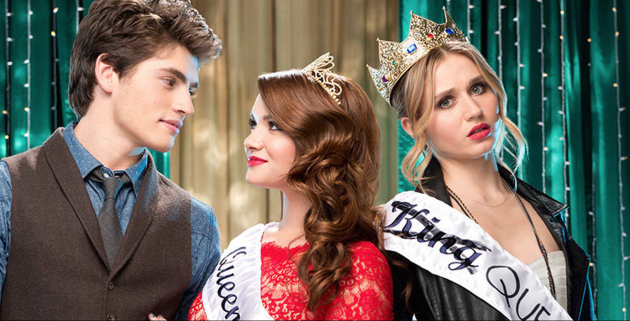
I’m leaving to head to St. Pete Pride this weekend, and it’s got me thinking about the state of Queer characters and storytelling today. I wrote last week about Queer as Folk, and I don’t want to trivialize that show’s importance, but I think the current state of queer storytelling truly shows that QAF is a show of the past and it wasn’t capable of, or perhaps the audience wasn’t ready for it to do the sort of things shows today are doing. I think we’ve officially left behind the time when queer shows and characters were primarily defined by their sexuality. Some part of that can be seen in the titling of shows. We’ve gone from shows like Queer as Folk and The L Word which reference their queer identities in the title, to shows like Looking and Faking It.  But it’s about more than just what the shows are called.

For starters, I think issues of queer visibility have gone through the roof. We’ve reached a point where shows are almost required to feature queer characters in some capacity. And more importantly, these queer characters get to be important to the overall story of the series, while also being more than just defined by their sexuality. There’s Nolan Ross over on Revenge (who beyond being generally fabulous also gets to be one of the few, if not the only, honest representations of bisexuality on TV), Cyrus Beene on Scandal is allowed to be gay and a horrible person too, and everyone’s favorite Sapphic scientist Cosima Niehaus over on Orphan Black (more on this in a minute). 

So we no longer have to look to exclusively queer shows for representation; instead, queer themes and characters and storytelling have made their way into the mainstream in a manner that they hadn’t as little as 10 years ago. And along with that comes the ability for queer characters to start to invade genres that have long been seen as havens of heteronormativity. Game of Thrones adapted Martin’s amazing world, but more importantly they took Martin’s characters who were gay in rumor and subtext and placed their sexuality firmly in the text of the show. As such, we have a fantasy series with gay, bisexual, and asexual characters. Likewise, Orphan Black is a sci fi show which has featured gay (Felix), lesbian (Cosima), and even trans (Tony) characters in its young 2 season run.  Even Penny Dreadful has found the time to work sexually ambiguous characters into its horror based story. As queer characters and storytelling grow to find itself more and more in the mainstream, it seems like typically heteronormative genres are starting to become more inclusive.


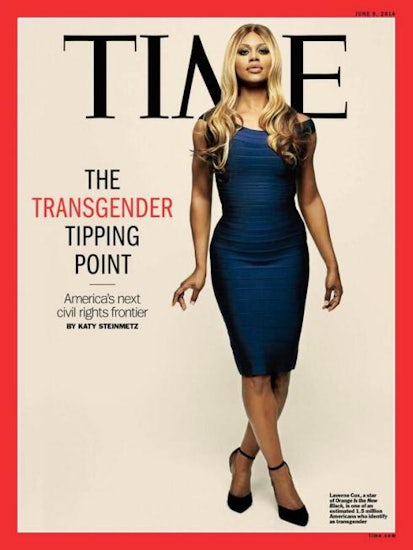
Speaking of Tony from Orphan Black, I think there’s also a case to be made that we’re seeing the start of a kind of trans revolution. Between Tony and Laverne Cox’s Sophia over on Orange is the New Black, I think it’s fair to say we haven’t had this much trans visibility on TV ever.  While it certainly isn’t where I’d expect the struggle to end, I do think that the presence of these characters as well as the popularity of shows like RuPaul’s Drag Race, and the media focus people like Cox and Carmen Carrera have gained lately serves to start up a dialogue on gender issues within this country.

But the way that LGBT characters have progressed into more typically heterosexual shows isn’t the only progress queer storytelling has made. Even the more exclusively queer shows of the day have moved in a different direction than their predecessors. As much as I sang the praises of Queer as Folk last week, I think it’s possible that Looking could progress into an even better series if it withstands the test of time. The main difference that I see between the two is that Looking seems to be interested in its characters as more than just their sexual orientation. So where QAF might have been “more interested in making its point than it is in simply allowing its characters to be and its story to develop,” Looking is just interested in allowing its characters to be themselves and progress rationally in a lot of ways. The closest Looking gets to being an issue show (which I think is territory QAF often found itself in) is in the story of the interracial relationship between Patrick and Richie. But as a show with an established interracial couple, you’d think it would be a subject they’d tackle more often.

Likewise, I don’t think that Faking It is as interested in making broad points and delivering its core message nearly as much as The L Word was. Faking It is far more interested in allowing the story of Karma and Amy’s relationship to progress organically and allow the natural conclusions about the development of human sexuality to happen as they will. But another similarity between Faking It and Looking that set them apart from their predecessors is that both shows are half hour comedies instead of hour long dramas. In the case of Looking, the show isn’t bringing the comedy as forcefully as it could, but it’s still working harder to bring the laughs than QAF did. This shift out of issue based storytelling into a purer plot/character based storytelling is important and noticeable.

I don’t know that these same sensibilities are being transferred over to other mediums. For the most part, film seems unchanged and anyone who might have been assuming that Brokeback Mountain’s release and relative success in 2005 would herald a new age of fearless mainstream queer cinema seems to have been wrong. But a lot of people (myself included) have been talking about how we’re in the midst of a TV renaissance, so it makes sense that the landscape is changing for the better. Better storytelling methods and better stories to be told have all led to a far improved atmosphere for queer characters and shows. Queer as Folk and The L Word did a great job of laying the foundation, but shows today have built upon that foundation to create something grander and more fabulous than even these shows could have imagined.

Thursday, June 19, 2014

Five Reasons Queer as Folk Should be Considered Great TV

In honor of Pride month coming to a close, I thought I'd make a couple posts dedicated to LGBT themes and stories in contemporary TV and Film. If I were a smarter person, and if the season's end hadn't left me with more excitement than I could contain, I would have saved my Ian and Mickey post for this outpouring of queer love, but if it makes you feel any better, you can read that post here.

Premium cable networks have been producing top notch television ever since they got into the original programming game. Shows like The Sopranos, Oz, and Queer as Folk were critically acclaimed, artful, and entertaining long before Mad Men and Breaking Bad made it fashionable to be so. And yet, Queer as Folk seems to have taken up a darker corner of the TV universe since its final episode aired. While people still remember The Sopranos and Oz fondly, Queer as Folk seems to have become the red headed bastard step child of TV. It’s remembered solely as a show that was groundbreaking for its portrayal of LGBT characters, and nothing more. And yet, in my opinion, Queer as Folk is as good a television series as we’ve seen in the 21st century. Here are a few reasons why:


1) Balance of a fairly large ensemble cast.
In the first season alone, QAF focuses on a cast of 10 characters. Each with his or her own storylines, history, and character traits. Each equally important and useful, and that’s to say nothing of the multitude of different love interests and other characters to enter and leave the show in its subsequent 4 seasons. It juggles its characters perfectly by allowing some episodes to pass without much focus being given to certain stories only to have them brought back to the forefront the following week. It does not allow a story to take up space in an episode for the sole purpose of filling time or because of an obligation to cover it. Shows like Glee and True Blood simply cannot claim the same.

2) A deep understanding of the art of long form storytelling.
I can safely say that QAF is one of the only shows I’ve watched all the way through (multiple times I might add) in which each of its main characters experiences a great and fundamental change over the course of all five seasons. It is my experience that, in most series, character change is a slow affair. If a TV series were to be compared to a novel, then each individual season would be akin to a chapter, or perhaps a collection of chapters, while the entire series is the novel. The character doesn’t tend to change over the course of each chapter, but experiences a compounding effect over the course of the entire book in order to reach some cathartic moment in the end. In this sense, if a TV series lasts for 7 seasons, the characters might have experienced a great change by the end of the 7th season. Now consider the character of Justin (played by the adorable Randy Harrison) in QAF’s first season. In the first episode, Justin is a scared timid kid who has to steel himself to step off of the curb and onto Liberty Ave (the show’s equivalent of San Francisco’s Castro). He’s still closeted to his friends and family, and takes on a passive role in his first meeting with Brian (Gale Harold). By the end of the first season, Justin has persisted through all of Brian’s subsequent rejections and has convinced him to attend the Prom as his date. This all happens moments prior to the season ending cliff hanger in which Justin is bashed by his main tormentor and left bloody on a garage floor (which of course facilitates his next big journey in season 2) with Brian “I don’t believe in love” Kinney sobbing and screaming uncontrollably while cradling his bleeding head. These transformations would be enough to sustain a lesser show for multiple seasons, and yet it’s a feat QAF pulls off in just 22 episodes.

3) A deep understanding and love of each of its characters.
Brian Kinney is one of my favorite TV characters. Here is a man that claims not to believe in love, to value sex above all else, and who is often presented as the most self-interested person you will ever hope to find. Over the course of the show we discover that most of that is a facade to protect himself from getting hurt, but the show never makes any overt moves to break down this illusion. Whenever Brian is faced with a situation in which a few simple words could save his most prized relationships, he always keeps his mouth shut. There are multiple moments throughout the series in which he clasps either his best friend Michael (Hal Sparks) or his lover by the back of the neck and kisses them as passionately as you’ve ever seen two people kiss on screen. These moments serve as Brian’s own personal “I love you” to the only two people on earth that he has those feelings for. He won’t say the words, but he will show it in the most physical way possible because he respects the physical more than he does the verbal. This is perhaps because, as a top dog (pun intended) in the advertisement industry, he knows just how faulty and misleading words can be. A lesser show would need to spell out that this is who this character is instead of trusting the viewer to simply get it.

4) It celebrates the good without condemning the bad.
LGBT individuals are strong willed, resourceful, creative, talented, and intelligent people. The lives we lead of subterfuge and constant fear tend to produce and nurture those qualities. So when QAF takes a character like Emmett (Peter Paige) from being a clothing retail associate to being Pittsburgh’s premier party planner, or when it shows how a group of gay men can pull together in the eleventh hour to give their  friends the wedding of a lifetime, or how a young man can overcome the horrendous after affects of his gay bashing and still be a renowned and successful artist, it is showcasing these strengths and talents in a remarkable and uplifting fashion. However, LGBT individuals can often also be riddled with self-doubt and self-loathing, and can fall into deep bouts of depression (we're kind of like regular people that way). Living our lives within a society built to continuously remind us that we are somehow wrong or defective can have that effect. So when QAF tells the story of a once comfortable and successful accountant, Ted (Scott Lowell), who loses everything and spirals into a crystal meth addiction, it is being honest without being judgmental. That Ted beats his addiction is a testament, again, to the strength and resilience of the gay community, but that he goes through a really dark place in order to get there (and that the progression of this story is so nuanced and well paced) is a testament to the show.


5) It has balls!
And it’s not afraid to show them either. In a time when gays were still being showcased as the funny, sexless best friend, QAF stood up and said, “Guess what, straight people, gays and lesbians have sex too! And when they do, it looks a little something like this!” From its back rooms to its bedrooms, QAF never once shied away from its graphic nudity and depictions of gay and lesbian sex. But that’s not the only way that the show had balls. QAF had the guts to also talk about the darker elements of the gay community. From hustling, to HIV, to drug addiction, to gay bashing, to cheating, QAF left very few stones unturned in its glaring and honest look into this community and the lives its members led. I love Will & Grace as much as the next guy, but that show was far more interested in getting laughs and showcasing the simpler aspects of being gay than this show was, and as a result I don’t know that it did nearly as much good for the LGBT community as Queer as Folk did.

For all of its triumphs, Queer as Folk had flaws too. It was not nearly racially diverse enough (with the exception of a couple random sex partners, the show is devoid of people of color), it basically ignores the trans community all together, and it never really touches on issues of bisexuality, questioning youth, or the intersection of sexual orientation and religion. The series also can be said to have suffered for it's place as a pioneer within American TV. While it's storylines are almost always well executed, at times it feels like the show is more interested in making its point than it is in simply allowing its characters to be and its story to develop. So while Michael and Ben's (Robert Gant) relationship progresses in an organic and understandable manner, the point could be argued that these characters only exist and interact in this manner because the show wants to tell the story of one man with HIV dating one without. It's an important story to tell, and the fact that it progresses well and organically is to the show's credit, but when a show has the responsibility of representing an entire community in the manner that QAF does, sometimes the "message" can be seen as being more front and center than the story.

But the fact remains that in 83 episodes, Queer as Folk accomplished things that other shows couldn’t do over a much longer span of time (I’m looking at you, Weeds), and I can only imagine how much more it could have accomplished if the showrunners hadn’t made the wise decision to bow out of the game while the show was still on top (pun still intended).

Sunday, May 4, 2014

FIlm Review: In Your Eyes

Joss Whedon (who is one of my own personal gods in case you didn't know) had a Q&A panel at 2013's Comic Con in which he mentioned a desire for more original content to come out of Hollywood. You can watch the entire panel here if you like, and if you don't have anything to do for the next hour. It's funny and insightful as Whedon has a tendency to be, but the focus on more original stories struck me as interesting. This is partially because I've been lamenting the various remakes and rehashes and adaptations coming out of Hollywood for the past couple of years, and it's just nice to hear someone I respect and admire so greatly admit to feeling the same way.

As we all know, Whedon's star is (finally) on the ascendent. He's gained a lot of success over the past couple years while helming the ship for Marvel's The Avengers adaptation and writing, directing, and producing his own adaptation of Shakespeare's Much Ado About Nothing. Anyone else sensing a pattern developing here? For a man with specific views on the need for original content, Whedon didn't seem to be putting out much original content. Indeed, even The Cabin in the Woods (brilliant film that it was) seemed to be the brain child of Drew Goddard. So where were all of these original ideas Whedon wanted to see come out of Hollywood but didn't seem ready to produce himself? Apparently sitting in one of his desk drawers for the last decade.

In Your Eyes is the most recent film to be released by Whedon. Given how busy the man is with Age of Ultron, and all of his other Marvel duties, I don't know how much he had to do with the film's actual production, but we do know that he is the sole person responsible for the script.

And what a script it is. In Your Eyes (which can be rented for only $5 here) is the story of Dylan (Michael Stahl-David) and Rebecca (Zoe Kazan), two people who couldn't be more different from one another but who find themselves inexplicably linked and drawn together. The film opens with Dylan and Rebecca as children, him in New Mexico and she living in New Hampshire, on what appears to be just a normal day for both of him. He's going to school and joking with his friends, and she's going sledding with her mother. As Rebecca's getting ready for the pulse pounding trek down the snowy hill, Dylan finds himself seeing things through her eyes, and when she crashes into a tree, the both of them feel it and are knocked unconscious. The film then jumps forward a decade or so to give us Dylan and Rebecca as adults. He's an ex-con fresh out of prison for breaking and entering and trying to get his life together, and she's married to the worst man imaginable living an unfulfilled, upper-class life. Their weird connection has continued in less invasive ways than the sledding incident, but it's kicked into full gear one day for no discernible reason. They find that they can talk to each other (out loud only) and see what one another sees, and also smell and feel what the other is smelling and feeling. What follows is a fascinating and entertaining story about how two people who've never even met find themselves falling in love.

The story works exceptionally well for a sap, like me, who loves romance and watching people fall in love. And for two people who are on screen together for less than five minutes, Michael Stahl-David and Zoe Kazan have exceptionally strong chemistry with one another. It was easy to forget during their scenes that they couldn't actually hear one another and were filming their respective parts in different locations. But deeper than the romance were themes about companionship and never being alone that I found to be really moving. But the romantic story in and of itself is great because these two people make one another better by being together. It's something I've noticed about the best of Whedon's romantic relationships: His characters don't have to change or give up anything about themselves when they get together. When that particular element is missing, the relationships tend to fall flat or not work.

The flaws in the film are nominal. None of the characters outside of the main two are developed as well. Most of them are two dimensional villain types who serve little to no purpose other than to be horrible and create tension for the couple. There are a number of scenes of the two of them talking to each other over their mysterious connection in public and getting odd glances from the people around them who think their talking to themselves. This could have easily been taken care of by each of them simply buying a Bluetooth and wearing it everywhere. Since the story takes place in a world where people seemingly walk around talking to themselves all the time, this is an odd problem for the story to have and never address. And the origin of this connection between them and whatever it is that sparked it into being is never explained in the film. There's a moment when Dylan says he's been thinking about the reasons why it might have happened when it did, and when Rebecca asks him what he thinks, he simply replies "Why not?" It's an exchange that suggests Whedon knew the question would come up eventually and either didn't want to bog down the proceedings with an explanation, or couldn't come up with one himself. As a choice, it feels a little lazy on his part, but I also recognize the potential desire to allow that element of the story to sit on the back burner while we just focus on these two characters falling in love. In that sense, whether this development is a stroke of genius or a deal breaker for the picture is something that I think is totally subjective.

Other than that, I honestly thought every aspect of the story worked. As much as I'm looking forward to Age of Ultron, and I can't stress enough how excited I am, I must say that if Joss Whedon continues to lead the charge for original content in Hollywood, then there's nothing more we could hope for. In Your Eyes blends romance and Sci-Fi in one of the best ways I've ever seen. Spend your $5 and watch it now; you won't be disappointed.

Saturday, April 19, 2014

Character Analysis: Ian and Mickey from Shameless

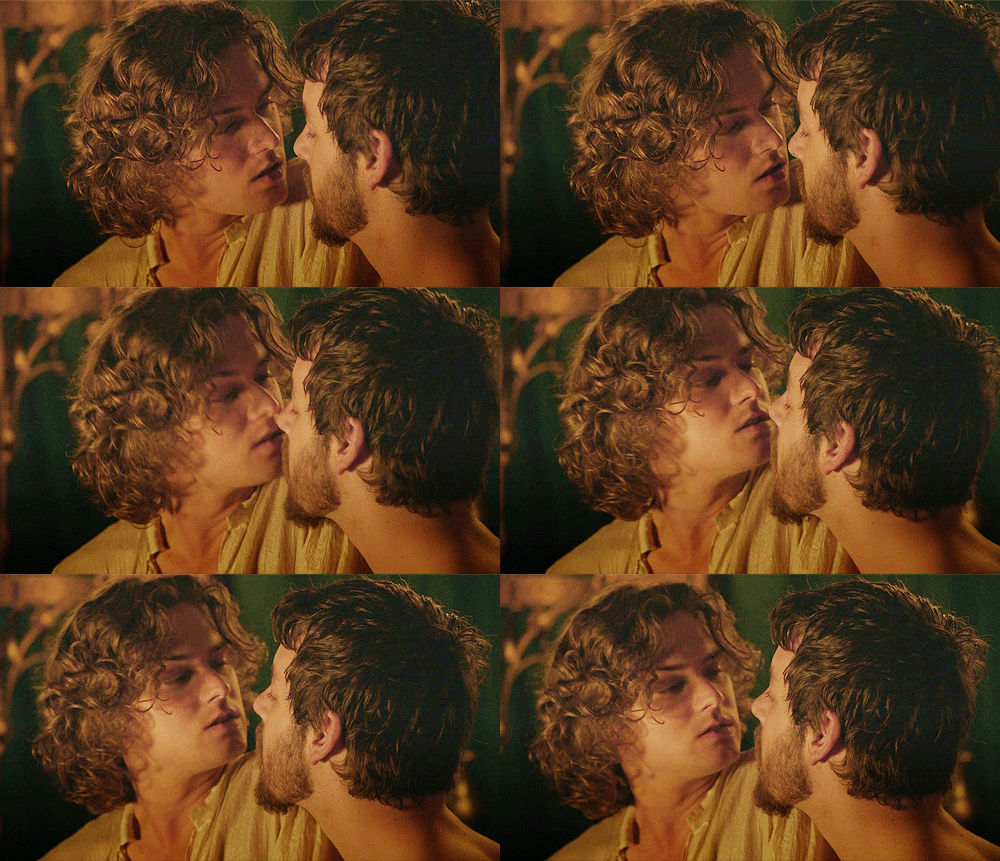
I honestly wasn’t sure about watching Shamless at first. It seemed to be a fairly typical Showtime series with extremes in sex, nudity, and vulgarity, but very little in character development or sound plotting. Couple that with its seeming premise of a low income family just struggling to make it through addiction and poor parenting, and I didn’t think there’d be much in the series for me to latch onto. But a very early promo for the series seemed to imply that at least one of the characters was gay.

Immediately, my attention was piqued. I make no bones about the fact that a show with a queer storyline will grab and better keep my attention than a show without one. In a world where so many minorities are ignored or nonexistent within a number of storytelling forms, it doesn’t seem like it’s too much to ask for a little visibility. So given that early promo, it seemed we were dealing with a show that would, at least on some level, cover the issue of growing up poor in the inner city and still having to navigate the murky waters of an "alternative" sexual orientation. That, at least, was a story I could dedicate some time and interest to. But I still went into the show, which is ostensibly a comedy, with fairly low expectations on how they’d go about handling this character and his story.

So imagine my surprise when, a mere four seasons later, Shameless has proven to feature one of the best and most nuanced queer relationships TV has ever seen. From the moment when Ian and Mickey have sex for the first time in the seventh episode of the first season, it’s clear that this relationship will be anything but simple and straight forward. But its the continued manner in which the writers find to complicate things between these two boys that makes the story so fundamentally fascinating and important. Here’s a couple of the reasons I think this is one of the most important queer story lines in TV.

The Characters

Ian and Mickey are two of the most unique gay characters that I think I’ve ever seen on the small screen.

As the show opens, Ian, who is about 15 or 16, is having an affair with his adult, married-with-children, boss from the convenience store where he works. But it’s important to note that Ian isn’t a victim. He isn’t being preyed upon by Kash so that the man can get his perverse sexual needs met. If anything, Ian is the aggressor in the relationship. This is a fact that’s made even more obvious when you find out that Ian is the top in all of he and Kash’s sexual encounters. Indeed, Ian is also the top in his sexual relationship with Mickey, but more on that in awhile.

Kash is certainly a closet case who is too afraid of his wife and shamed by his muslim religion to come out properly, but what he isn’t, per se, is a pedophile (or an ephebophile to be more exact). Even though he is engaged in a sexual and even fairly romantic/emotional relationship with a teenager, the show never made it seem like Kash was attracted to Ian specifically because he was a teenager. Instead, everything about it seems to suggest an arrangement of convenience (interesting when you consider the place the two of them work). Kash sleeps with Ian because Ian is the only gay man he knows and he isn’t strong enough to go out and find someone his own age; Ian sleeps with Kash because he honestly likes the man and also because its a way for him to take control and have some level of power within his sexuality.

Ian isn’t really shown as being ashamed of his sexuality in the early goings of the show. He doesn’t live in an environment that’s very conducive to alternative sexual orientations, and his family and the support they give each other is so important to him that of course he’s worried that disclosing his sexuality might color their opinion of him. But the truth is that while it might take Ian some time to come out, when he does so it’s done rather effortlessly. This is a credit to the series as well as to the character who seems to have far less anxiety about his sexuality than most gay teen characters on TV do.

Mickey, on the other hand, carries a lot of anxiety and conflicting feelings towards his sexual orientation. It’s to the character’s credit that these fears and uncertainties manifest themselves in very interesting and entertaining ways. Instead of being almost obnoxiously self-conscious around people, trying his hardest to hide what we all know to be obviously true, Mickey has a tendency to simply live his life, lashing out from time to time.

The thing with Mickey is that his hyper-masculine personality isn’t a persona or a facade to hide his divergent sexual orientation; its who he really is. Mickey’s grown up in a world where he had to be hard and tough in order to survive. The Milkovich family is one of criminals. They’re what the Gallaghers would be without the steady, gentle hand of Fiona to guide them and keep them on track. Raised by a patriarch who is in and out of prison and is verbally, physically, and it’s suggested even sexually abusive when he is out, Mickey had to learn early on how to be tough and how to give as good as he got in order to survive.

This is one of the many ways he’s set apart from a lot of the other closeted LGBT characters on TV. Mickey has sex with women, he robs stores, he carries guns, he gets into fights, and he’s the “dirtiest white boy in America” because he honestly doesn’t know any other way to be. In the early moments of the first and second season, Mickey isn’t so much in the closet as he’s just incapable of conceiving of the possibility that he’s gay. Getting fucked by Ian is just something that’s fun and feels good. Indeed, for him bottoming isn’t about status, or the giving up of any level of power or masculinity at all. Mickey is in full control of his sexual proclivities. “Liking what I like don’t make me a bitch” he expresses to Ian once after Ian tries to shame him for being a bottom.

In fact, Mickey seems to be way more understanding about what he likes in the bedroom than a lot of gay characters tend to be. At a pivotal point in the third season when he invites Ian over while he’s got the house to himself for the weekend, he comes out of his room with a string of (fairly large) anal beads and asks Ian to use them on him. While it’s possible that he acquired the sex toy only recently, my guess has long been that Mickey learned early on that he enjoyed being penetrated, and Ian isn’t the first boy to be granted that pleasure. Conversely, Ian has no clue with the anal beads are for and has no idea how to (or why he’d even want to) go about using them. So while Ian is more in control and has a firmer understanding about his sexual orientation and is strong enough to come out, Mickey is in more control of his sexuality and sexual lifestyle. It’s a distinction that works to set this relationship apart from others like it.

But again, that element of Mickey’s stunted emotional and psychosexual development is still important. So when he tells Ian after their first sexual encounter “Kiss me and I’ll cut your fucking tongue out,” it’s important to remember that he isn’t posturing; this simply isn’t the kind of situation where kissing will be a part of the equation for him because in spite of what he might do in the bedroom, he simply isn’t gay.

The Pacing:

So the Ian/Mickey storyline starts out with a couple of very solid characters. But the show doesn’t stop there. The slow burn of Ian and Mickey’s relationship is one of the other elements that makes this story so worth watching. This isn’t love at first sight, and it isn’t the typical shoehorning in of intense emotional feelings where they don’t belong; it’s two fully realized characters slowly falling in love with each other and their relationship progressing from something purely physical into something a lot deeper.

Admittedly, it would be easy to say that Ian falls for Mickey quicker than Mickey seems to fall for Ian, but in a lot of ways even the show isn’t too clear on Ian’s feelings. As recently as the penultimate episode of the latest season, when asked whether or not he loves Mickey, the best Ian can come up with is that he likes the way Mickey smells.

For Mickey, however, the process of falling in love with Ian, and more importantly realizing that he’s falling in love with Ian, is slow and arduous, and wonderfully rewarding. There are a couple of ways in which the show has a tendency to show rather than tell us that Mickey is falling: the first is with really rewarding moments that harken back to, and obviously contradict earlier moments in the show.

It’s wonderful to watch the couple’s first kiss and to remember that early line about tongues getting cut out. But it’s also wonderful to have Mickey get out of juvie at the beginning of the third season, immediately find Ian for one of their sex romps, and in the midst of their special brand of pillow talk let it slip that he missed Ian while he was on the inside. He plays it off like this emotion was only due to not being able to get the kind of sexual gratification that he craves, “I have to do all the fucking in Juvie, otherwise I’d end up someone’s bitch,” but when coupled with the scene from the first season where Ian visits Mickey in jail and tells him he misses him and gets another threat for the effort, it becomes easy to see that Mickey’s on a steady path towards loving the guy he’s been having sex with for the last few seasons.

The Ian/Mickey story is crammed with these parallels. There’s the kissing of course but also small scenes where Ian begs Mickey not to do something harmful which is then mirrored in one of the more heartbreaking scenes between the two where Mickey, despite his protests that he’d do no such thing, begs Ian not to leave him and join the army. These moments show growth for the character and the depth of their relationship as a whole and they never cease to be amazing to watch.

The other cue to Mickey’s continued growth and his deepening feelings for Ian lies in his clothing and styling. It’s something my friend Stephanie first pointed out to me when we were watching one of the recent episodes together: Mickey’s gone from being the “dirtiest white boy in America” to someone clean, presentable, and all the more attractive for it. I think this is due to two reasons: 1) Mickey feels good about himself when he’s with Ian and therefore takes more care and pride in his appearance. 2) After watching Ian engaged in a relationship with Kash and then in one with Ned (both of whom are older, well groomed, and somewhat well-off gentlemen), Mickey seems to have started transforming himself into someone he thinks Ian would be more likely to find attractive. It starts with one of my favorite scenes in the third season where Mickey asks Ian what it is about this old dude that he finds attractive and then almost immediately starts to take on some of those elements himself.

Notice how the gunshots are used to punctuate each of Ian’s statements about Ned. He’s engaging Mickey in a conversation that gets at the heart of Mickey's insecurities about their relationship and it angers him and in his anger he fires the gun. The remark that Ian makes about Ned buying him things is aggravating partially because Mickey knows its bullshit and partially because he knows that’s something that he can’t give to Ian. But he doesn’t fire the gun in the wake of the oh-so-important “He isn’t afraid to kiss me” statement because he knows that that’s not bullshit and that it's something that Ian values. And in his desire to be the kind of person Ian can love, he knows that this is the sort of direction their relationships needs to take.

But I’ve often thought that more than just wanting to acquiesce to whatever it is that he thinks Ian wants from him, Mickey also feels the desire to take their relationship to that next level but he lacks a basic understanding of how a healthy romantic relationship works which would help him to know how to navigate those waters. The look on his face when Ian says what he says about the kissing is one of deepest shame. He knows that Ian’s claim that his unwillingness to kiss him is based in cowardice is accurate, and yet the way he responds to that isn’t with the bruised ego of the tough guy, but by almost immediately rectifying the situation. It’s as if he’s saying “If what it takes for me to keep you is a kiss every now and then, then by God am I willing to do that.” Likewise, I think he’s equally ready and willing to alter the way he dresses and grooms himself to those same ends. It’s one of the most subtle things the show has done, but when Mickey starts showing up in the third and fourth season with his face washed and his clothes looking oddly more conservative and almost yuppy, it’s a noticeable change.

The Roadblocks:

But all of that would be for naught if it weren’t for the show’s willingness and amazing skill at placing interesting, horrifying, but believable roadblocks in Ian and Mickey’s way. In a typical show, the romantic roadblocks tend to be about cliches such as infidelity. With these two characters, the roadblocks are more along the lines of Mickey’s homophobic and abusive father catching the two of them together, beating them both, and then hiring a hooker to come and basically try to rape the gay out of him.


Their roadblocks have a tendency to be Ian trying to confront Mickey about what he’s long known to be true in an attempt to get a real reaction from him and Mickey responding by beating the shit out of him. These scenes are never easy to watch, but there’s something to be said for the couple’s ability to work past them and to overcome their
issues in the long run. Also there’s the fact that these moments are all grounded in the show’s strong characterization. There never seems to be any question that Mickey’s beating Ian has nothing at all to do with wanting to hurt the boy, or even to assert some level of dominance over him, but has everything to do with his futile attempts to beat this thing out of himself. I don’t know that this rationalization makes the act itself any better, per se, but I do know that I watched the scene in question feeling much worse for Mickey than I did for Ian.

These roadblocks (or speed bumps, maybe?), as well as the many others, serve to make this relationship unlike any other on TV. The element of one of the boys being singularly unable to accept this crucial part of who he is is important. But if that’s where the story stayed, it could easily become just another story about a gay man in love with a closet case. The fact that the show adds unique and interesting outside forces into the mix keeps this story well ahead of the curve in a lot of ways.

The Ian/Mickey storyline is one that I follow closely in part because it perfectly encapsulates what I love about long form storytelling. It’s taken 4 seasons to get them to this point, but Mickey has finally come out of the closet and told the world that he is in fact gay. He did it in a moment where it looked as though if he didn’t, he’d lose Ian. Their entire storyline over the course of this fourth season has more or less been about how incapable Mickey is of losing Ian again, and so we’ve seen him take some drastic steps forward to ensure that that didn’t happen. The relationship will never be easy, and indeed the speed bumps the show has lined up for them in seasons to come seem to be as exciting and interesting as anything they’ve thrown their way thus far.

Shameless isn’t really an all around great TV show. There are a lot of elements to it that they haven’t quite figured out as well as they have the Ian/Mickey thing, and even more elements that simply don’t work no matter what they try to do with them. But the odd thing is that the way the show fails in so many other story lines only serves to show just how well it succeeds with this one. Through consistent characterization, strong pacing, and an ability to keep the struggles of the relationship fresh and interesting, the writers of Shameless have succeeded in creating one of the single greatest queer relationships, and maybe one of the best relationships in general, that TV has ever seen. Now if we could only get the two of them to finally say “I love you!” my life would be complete.